Satellite Imagery For
Energy
Enhancing energy infrastructure
Manage Assets
Monitor heavy equipment and RoW encroachment remotely
Plan New Infrastructure
Utilise advanced data to enhance the site selection process
Analyse MArkets
Leverage unrestricted access to monitor energy facilities worldwide
The European Commission has taken a bold stance in building framework for carbon neutrality by 2050 with ambitious benchmarks by the year 2030. With tremendous investment going into new infrastructure and environmental monitoring along with considerable funding for the “Green Deal”, very high resolution (VHR) satellite imagery is poised to play a large role in the success of these initiatives.
Regular monitoring with VHR satellites is a smart and cost-effective way to keep an eye on your (and your competitors’) assets, explore new operations and prove compliance. The ability to integrate with off-the-shelf and custom software proves crucial for energy providers and analysts around the globe.
As the leading supplier of VHR imagery and the only supplier of 30 cm resolution to European data access programs, European Space Imaging is your trusted satellite imagery project partner.
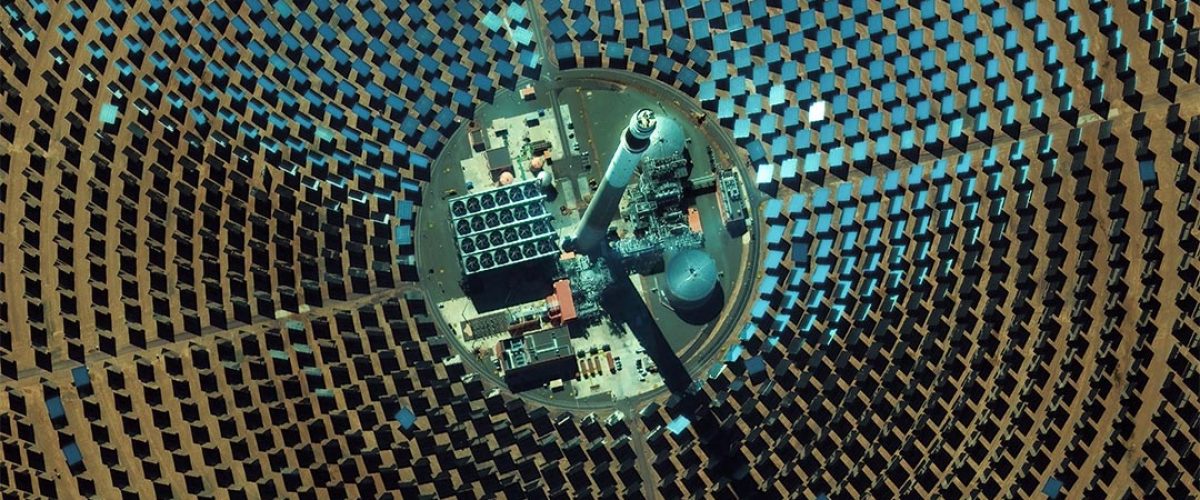
Using satellite imagery for ideal energy infrastructure site selection across the EU
Read about this and more satellite imagery applications in the AEC INCITE industry report: The Source of Power – How Satellite Imagery Propels The Energy Sector Into The Future
DETAILED Inspection
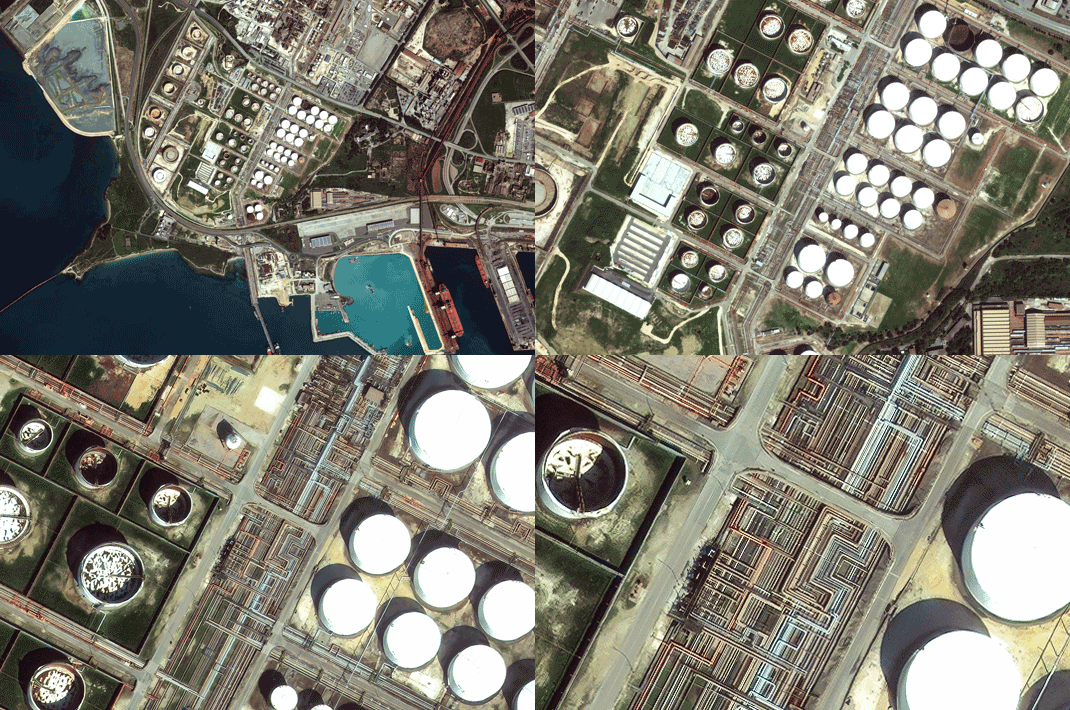
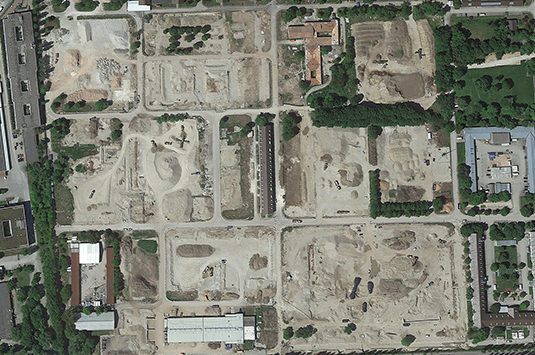
Very high resolution satellite imagery is clear enough to show infrastructure details such as small pipes and peices of equipment. This allows precise monitoring of on-site assets. It is ideal for:
- Monitoring Righ of Way encroachment
- Equipment inventory
- Calculating reserve stocks
- Assessing damages
- Analysing infrastructure worldwide
- Optimising on-site inspections
Vegetation Management
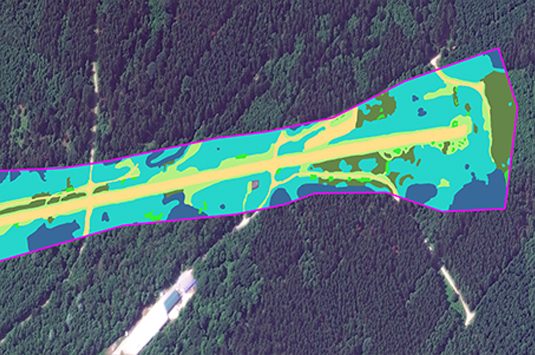
European Space Imaging offers more spectral diversity and better spatial resolution than any other satellite imagery provider – allowing you to see more of what is actually happening on your land. A vegetation classification map, as depicted here, is derived from multispectral and stereo imagery.
The stereo imagery provides tree height data and the multispectral imagery can give insights such as plant species and health. This enables vegetation encroachment monitoring and environmental impact analysis for compliance purposes.
RESPOND TO CHANGE
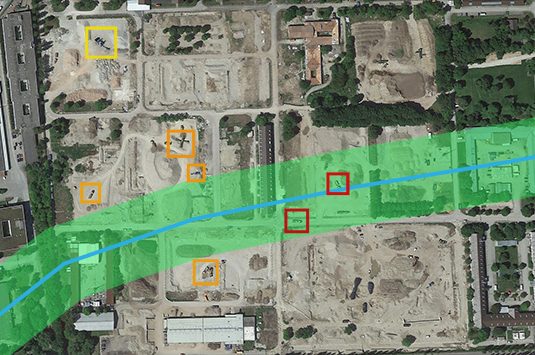
VHR satellite images can be used in software utilising Artificial Intelligence (AI) to automatically detect and analyse changes. This rapidly growing technology offers “off-the-shelf” solutions for a number of applications including infrastructure asset monitoring.
The ability to remotely monitor Third Party Encroachment (TPE) along energy corridors with a high level of detail, accuracy and automation saves asset managers precious time and resources when organizing on-site inspections.
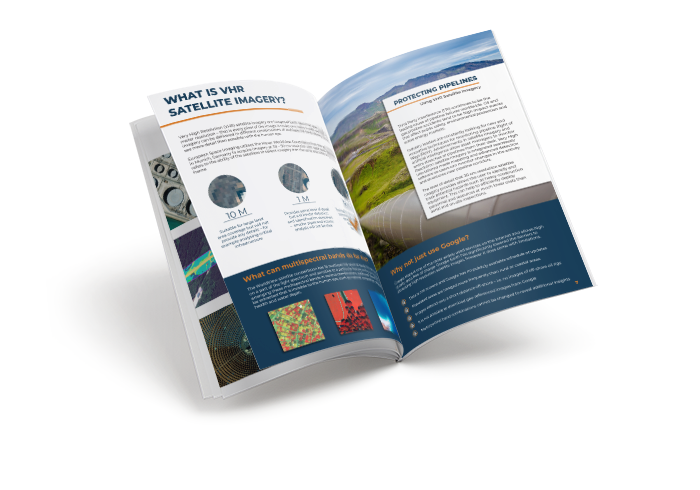
Download the Latest Edition of INCITE
The Source of Power: How Satellite Imagery Propels The Energy Sector Into The Future
The definitive guide to acquiring and using satellite imagery in the energy industry.

VHR Satellite Images Show Damage After Niscemi Landslide
In January 2026, Italy declared state of emergency after being hit by Cyclone Harry – a storm that brought 10-metre waves and torrential rains of over 300 mm in 48 hours. The most severely affected regions were Sicily, Calabria and Sardinia, with the damage in Sicily alone estimated to be more than 1.5 billion euros. EUSI collected Very High Resolution satellite imagery of the affected areas, including Niscemi – a Sicilian town hit by a massive landslide.

The Potential of WorldView Legion for the Safety and Security in Europe
In the ever-evolving landscape of global security, satellite imagery has become an indispensable tool for governments, organisations, and businesses worldwide. Many of them are now learning about the new opportunities that the six recently launched Vantor WorldView Legion satellites bring: higher border security, improved maritime surveillance, faster reaction to developing events, and much more.

Beginner’s Guide to Satellite Imagery: 10 Terms You Need to Know
Satellite imagery is an amazing but highly technical field with terms that might be hard to understand, especially for somebody with expertise in a completely different area. That’s why we are explaining the basics of satellite imagery in this article. What’s geolocational accuracy? What is the ideal off nadir angle? How can you see through clouds? Let’s dive right in.