Satellite Imagery For
Civil
Government
See The Best Way Forward
Automated Mapping
VHR imagery combined with Artificial Intelligence reduces the need for GIS specialists
Enforce Regulations
Detect and confirm new structures and monitor environmental compliance
Grow Sustainably
Utilise advanced datasets for safety, innovation and sustainability
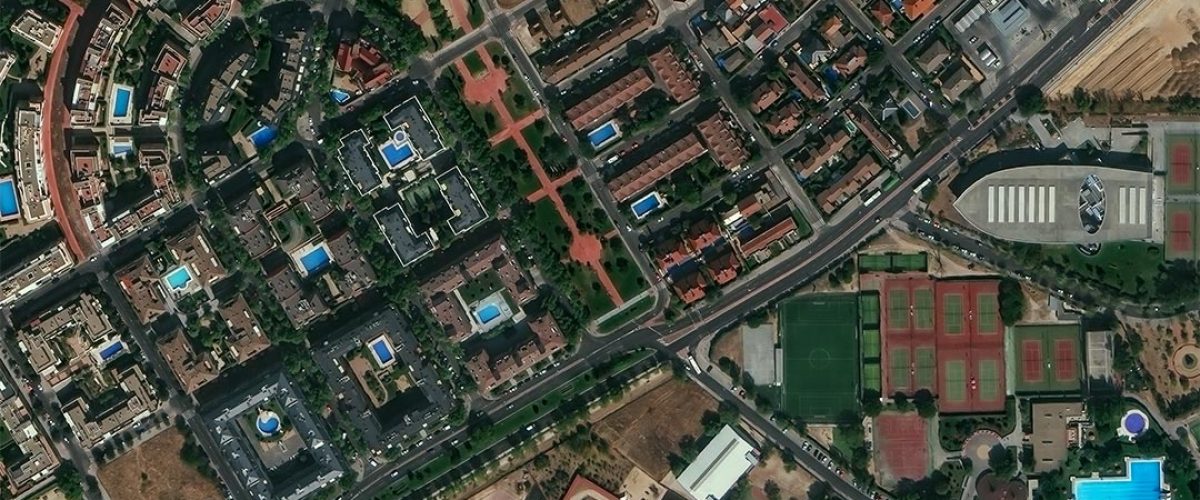
Very High Resolution (VHR) satellite imagery gives you a new perspective from which to make informed decisions about the security and future of your city or state. Monitor the change in your environments, accurately map in very fine detail, and plan for the future with the best data available.
A methodology to classify urban poor areas enabling improved infrastructure
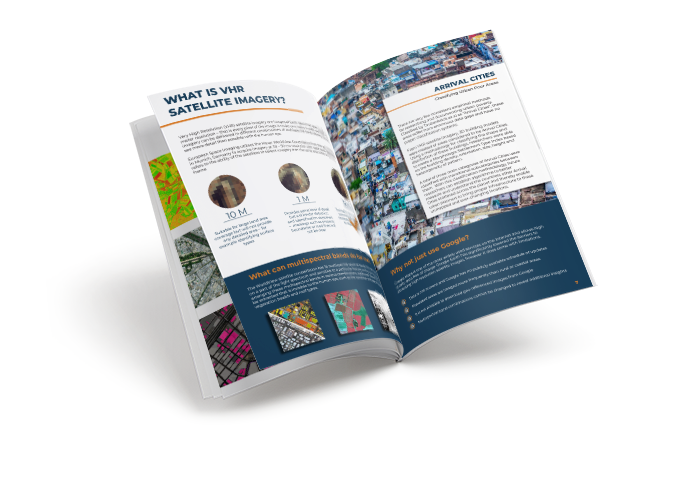
Read about this and more satellite imagery applications in the Urban Planning INCITE industry report: From Urban To Rural – Enabling Sustainable Urban Planning and Development Using Satellite Imagery
SMART DECISION-MAKING
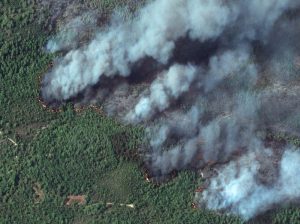
The best decisions are informed ones. Very high resolution satellite images show you the situation as it really is in near real-time, optimising your response to any situation. Whether you are seeking new information about an event, or want to confirm other sources of information, satellite imagery can help you answer questions about:
- Migration
- Urban planning /Â Sustainable development
- Asset management
- Tax control
- Roads and utilities management
- Construction
- Emergency planning
MONITOR CHANGE
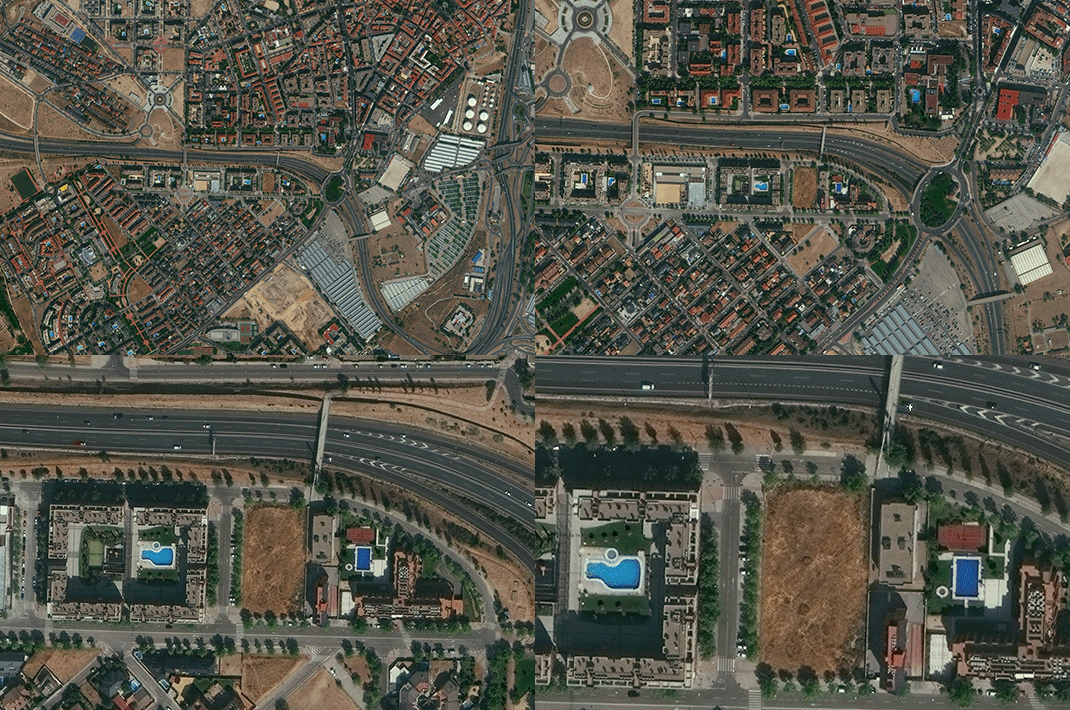
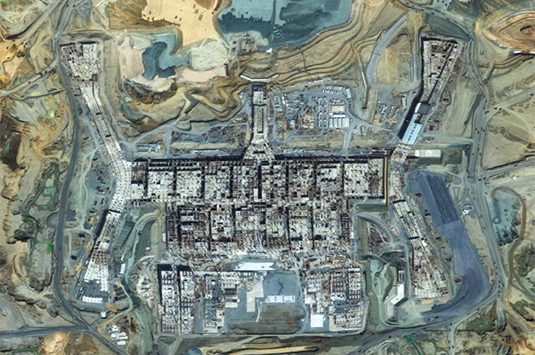
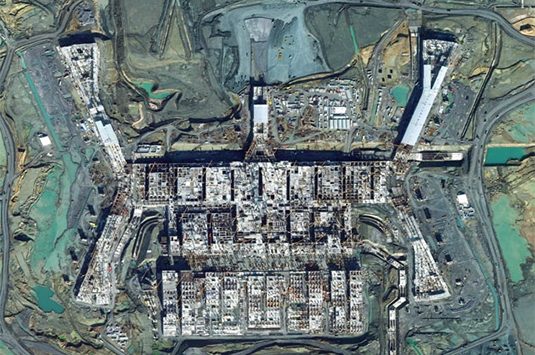
To truly understand the past it is useful to have a record of it. Our world is being imaged more frequently than ever before, giving us an image library documenting the changes that have taken place over recent decades. We are able to supply this archive imagery, and can also arrange new satellite image acquisitions over your area of interest – so you can see what is happening there now. This can support operations such as:
- Agricultural controls
- Detecting illegal buildings
- Maintaining cadastral maps
- Monitoring regulatory compliance


Learn More About
Ecopia GFX
By European Space Imaging
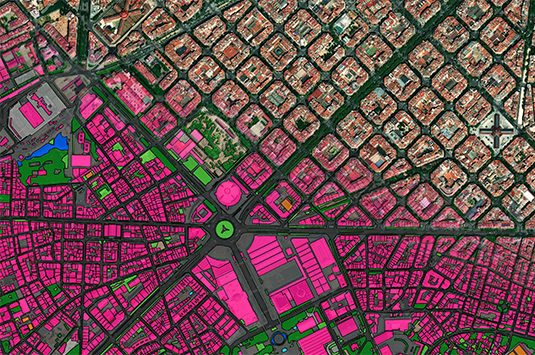
Ecopia Global Feature Extraction (GFX) Powered by European Space Imaging is a unique partnership that utilises the freshest, highest quality satellite imagery along with the most advanced artificial intelligence from Ecopia.AI (Ecopia) to offer accurate geospatial feature extraction at continent-wide scale.
The product comes with up to 12 core features eligible for extraction, so users can receive comprehensive land cover maps with zero in-house GIS work. The resulting vector maps are delivered as easy-to-use shapefiles, enabling users to focus on necessary analytics rather than time consuming map making.
Download the Latest Edition of INCITE
From Urban To Rural: Enabling Sustainable Urban Planning and Development Using Satellite Imagery
The definitive guide to acquiring and using satellite imagery in for civil government officials.

Earth Observation Turns Ecological Targets into Measurable Outcomes: How Satellite Imagery Supports Compliance with Europe’s Nature Restoration Regulation
The EU’s Nature Restoration Regulation (NRR) entered into force in 2024 and set legally binding targets to restore degraded ecosystems across Europe. With National Restoration Plans due in September 2026, Member States face an urgent question: how do you map, plan and monitor restoration across millions of hectares in a consistent, verifiable way? Earth Observation (EO) – and Very High Resolution (VHR) multispectral satellite imagery in particular – is increasingly the answer.

EUSI Upgrades German Ground Segment to Enable Europe’s Fastest Request-to-Receive Satellite Intelligence via Secure Web and API Platform for Defence and Emergency Agencies
European Space Imaging (EUSI) announced a major upgrade of its satellite ground segment and cloud infrastructure, further accelerating its industry-leading satellite tasking and intelligence delivery capabilities through the secure ATOM™ web and API platform. The platform, in combination with EUSI’s Rapid Satellite Intelligence (RSINT) program, enables satellite tasking up to 30 minutes before image acquisition and delivery of imagery within 15 minutes of collection.

Maritime Domain Awareness in European Arctic Regions With VHR Satellite IntelligenceÂ
With the Arctic warming nearly four times faster than the average, the ice in the High North is melting and the sea is becoming increasingly navigable. In 2025 alone, 1812 vessels entered the Arctic Polar Code area, which is a 40% increase since 2013 when data collection began. While this rise in traffic presents potential commercial opportunities, more vessels also mean more risks to people and resources.