
Satellite Imagery For

Urban
Planning

government

Satellites for sustainable Growth

Enforce Regulations

Detect and confirm new structures and monitor environmental compliance

Plan New Infrastructure

Utilise advanced data to enhance the site selection processĀ 

Analyse Impact


Assess vegetation health, ground water and human activity changes

Very High Resolution satellite images offer a unique view of what lays in, on and around urban and rural settlements. It provides a cost-effective and simple method of monitoring wide areas both locally and globally, as opposed to using in situ data, and is an indispensable tool for managing the actions and events that impact urbanisation leading to urban sprawl.

A methodology to classify urban poor areas enabling improved infrastructure

Read about this and more satellite imagery applications in the Urban Planning INCITE industry report: From Urban To Rural – Enabling Sustainable Urban Planning and Development Using Satellite Imagery

Download the Latest Edition of INCITE

From Urban To Rural: Enabling Sustainable Urban Planning and Development Using Satellite Imagery

The definitive guide to acquiring and using satellite imagery in the urban planning industry.

DETAILED ANALYSIS

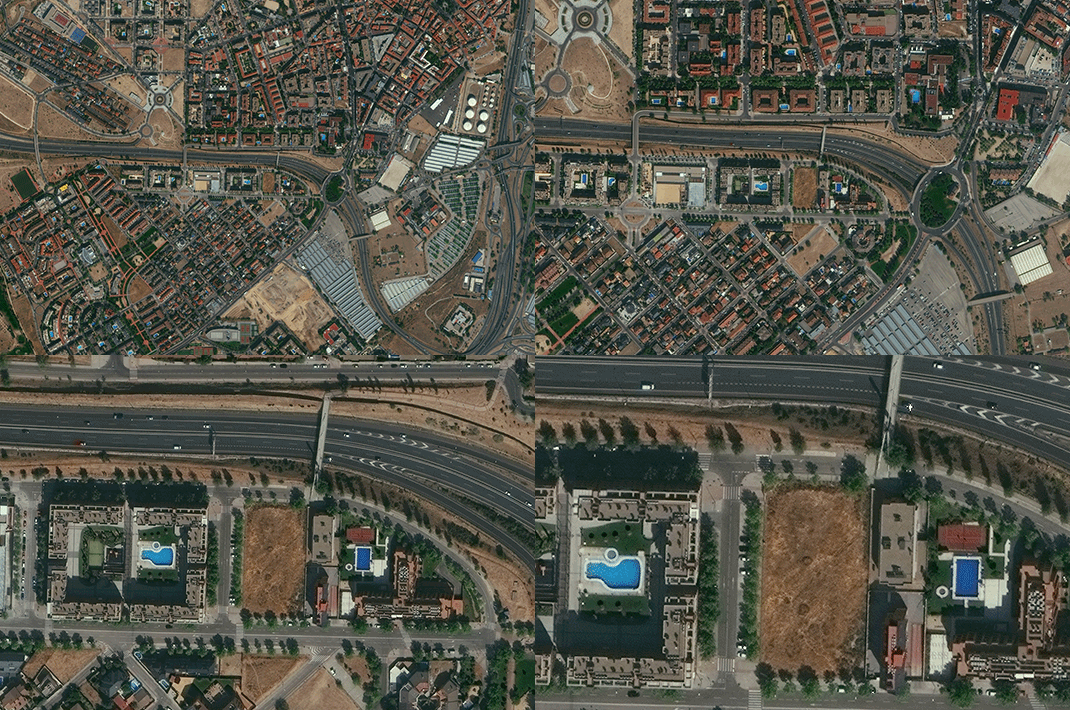
Very high resolution satellite imagery is clear enough to show road lines, sidewalks, vehicles, small structures and even people. This allows for precise analytics for city development. It is ideal for:

  • Studying Traffic Patterns
  • Crowd Management
  • Small Feature Identification
  • Verifying Property Lines
  • Mapping Road Features
  • Walkability Analysis

MATERIAL IDENTIFICATION

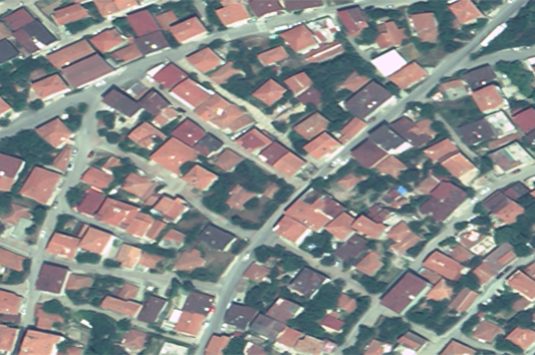
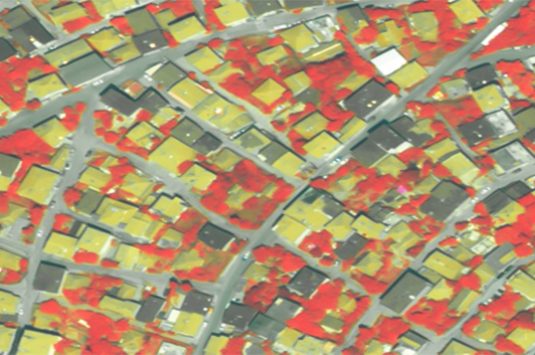
We offer more spectral diversity and better spatial resolution than any other satellite imagery provider – allowing you to see more of what is actually happening in your city. Multispectral imagery can assist in identifying building materials, separating organic and synthetic surfaces, analysing plant health and much more.

This has endless applications including environmental impact studies, compliance reporting and impervious surface calculations.

roof-alaysis-rgbroof-analysis-nir2-yellow-blue

Learn More About

Ecopia GFX
By European Space Imaging

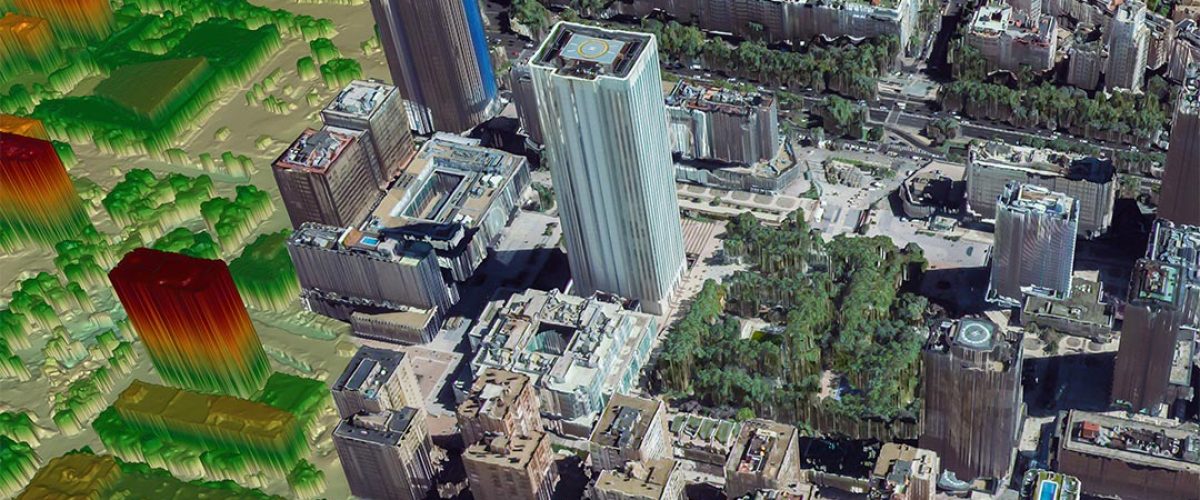
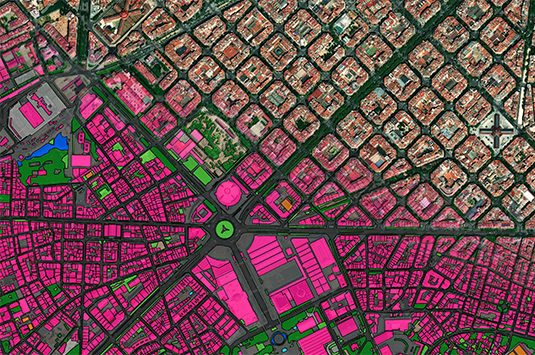
Ecopia Global Feature Extraction (GFX) Powered by European Space Imaging is a unique partnership that utilises the freshest, highest quality satellite imagery along with the most advanced artificial intelligence from Ecopia.AI (Ecopia) to offer accurate geospatial feature extraction at continent-wide scale. The product comes with up to 12 core features eligible for extraction, so users can receive comprehensive land cover maps with zero in-house GIS work.

The resulting vector maps are delivered as easy-to-use shapefiles, enabling users to focus on necessary analytics rather than time consuming map making.

Barcelona Layers gradient

Learn More About

City Morphology

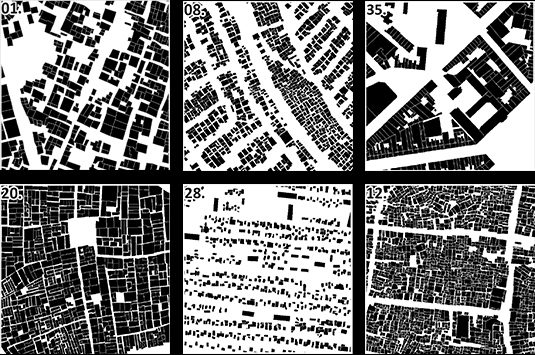
Large-scale monitoring with VHR satellite imagery provides valuable information about the morphology of a city. Understanding the patterns of new construction and traffic in a rapidly growing municipality provides insights into new infrastructure requirements.

Mapping and GIS activities are greatly enhanced with the use of VHR multispectral and stereo satellite imagery.

City Morphology graphic

Learn More About

Download the Latest Edition of INCITE

From Urban To Rural: Enabling Sustainable Urban Planning and Development Using Satellite Imagery

The definitive guide to acquiring and using satellite imagery in the urban planning industry.

satellite antenna

EUSI Upgrades German Ground Segment to Enable Europe’s Fastest Request-to-Receive Satellite Intelligence via Secure Web and API Platform for Defence and Emergency Agencies

European Space Imaging (EUSI) announced a major upgrade of its satellite ground segment and cloud infrastructure, further accelerating its industry-leading satellite tasking and intelligence delivery capabilities through the secure ATOMā„¢ web and API platform. The platform, in combination with EUSI’s Rapid Satellite Intelligence (RSINT) program, enables satellite tasking up to 30 minutes before image acquisition and delivery of imagery within 15 minutes of collection.

Read More Ā»
Ship in Arctic waters

MaritimeĀ DomainĀ AwarenessĀ in EuropeanĀ ArcticĀ RegionsĀ WithĀ VHRĀ SatelliteĀ IntelligenceĀ 

With the Arctic warming nearly four times faster than the average, the ice in the High North is melting and the sea is becoming increasingly navigable. In 2025 alone, 1812 vessels entered the Arctic Polar Code area, which is a 40% increase since 2013 when data collection began. While this rise in traffic presents potential commercial opportunities, more vessels also mean more risks to people and resources.

Read More Ā»

Discover
What's

NEW