Maritime Domain Awareness in European Arctic Regions With VHR Satellite Intelligence

With the Arctic warming nearly four times faster than the average1, the ice in the High North is melting and the sea is becoming increasingly navigable. In 2025 alone, 1812 vessels entered the Arctic Polar Code area, which is a 40% increase since 2013 when data collection began.2 While this rise in traffic presents potential commercial opportunities, more vessels also mean more risks to people and resources.

“The [Arctic] region’s melting ice, thawing permafrost, and rapidly shifting ecosystems have far-reaching implications for global security, energy supplies, transportation and environmental sustainability.”

Why the European Arctic needs to be monitored

The increased navigability of the European Arctic opens the door for unregulated and high-risk activity: 

  • Shadow fleet (sanctioned Russian vehicles) 
  • Illegal fishing 
  • Smuggling and trafficking 
  • Outdated vessels without ice classification
  • Increased military presence 

Besides the threats posed by military and illegal activity, the region is also extremely sensitive to pollution. „An oil spill in ice-covered waters can be catastrophic and much more challenging to contain and clean up, compared to ice-free areas, due to the lack of appropriate technologies,” writes the Belfer Center for Science and International Affairs4.  And yet, the tools to monitor and act in the High North are limited, as Arctic States deal with insufficient resources, data gaps, and outdated equipment. 

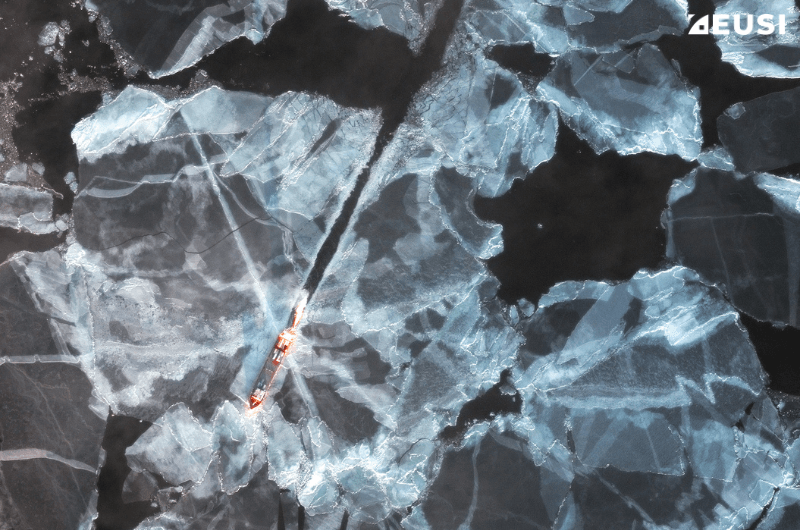
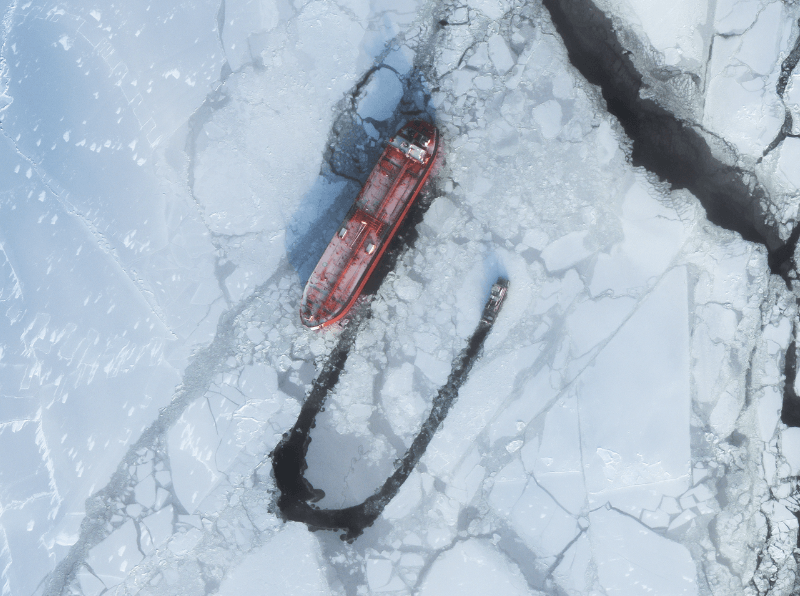
Very high resolution satellite image of a ship in ice

Satellite imagery © 2026 Vantor Provided by European Space Imaging

Monitoring the Arctic is no easy task

Monitoring the European Arctic is accompanied by numerous challenges. First off, the region is vast. For example, Norway alone manages one of the largest maritime zones in Europe, with an EEZ of over 2 million km2, much of it in Arctic waters. Harsh weather brings difficulties to any staffed activities – strong winds, high waves and low temperatures are risky for personnel, especially with search and rescue capabilities being limited in the region. But the weather isn’t a problem only for the human crew; UAVs are inefficient for surveillance in the North because the cold temperature reduces their battery life and causes malfunctions. Moreover, monitoring such a large area with patrol vessels or aircraft is expensive, time-consuming, and in some cases even downright impossible.

“Storms with significant wave heights of more than 4 m [in the Barents Sea] are observed on average 70–80 times a year, with significant wave heights more than 5 m - 40–60 times a year.”

Are satellites the solution?

Satellite imagery can significantly increase maritime situational awareness in the High North, particularly thanks to:

  • Easy access to remote areas
  • Large area coverage
  • No local personnel

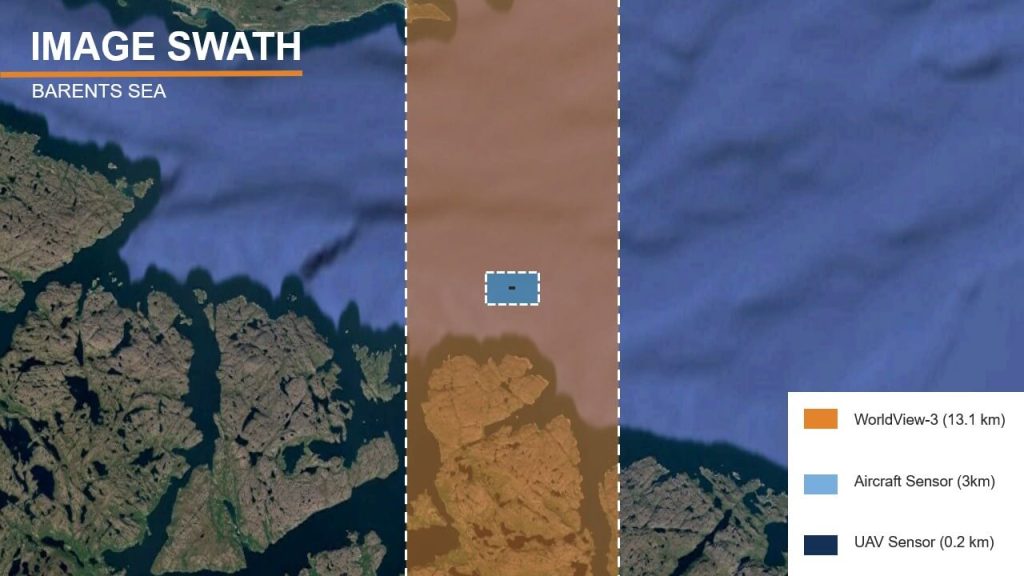
Contrary to aircraft, which have been reporting GPS jamming over certain locations in Northern Europe, satellites are completely unaffected by borders, terrain, or other geopolitical restrictions. They can collect hundreds of square kilometres in one shot, no matter how remote the area.

Comparison of the image swath of a satellite (WorldView-3: 13.1 km), an aircraft sensor (3 km) and a UAV sensor (0.2 km)

A single satellite strip can cover hundreds of square kilometres. Map background: Google Earth

Satellite imagery at 30–50 cm resolution gives you the necessary detail to identify, analyse and monitor vessels as well as ice conditions, leading to:

  • Evidence-based decision-making for maritime governance
  • Enforcement of maritime regulations and transit rules
  • Objective, persistent record of activity, including documentation of foreign vessels in national waters
  • Lower reliance on costly aerial patrols
  • And much more

Detect and identify vessels

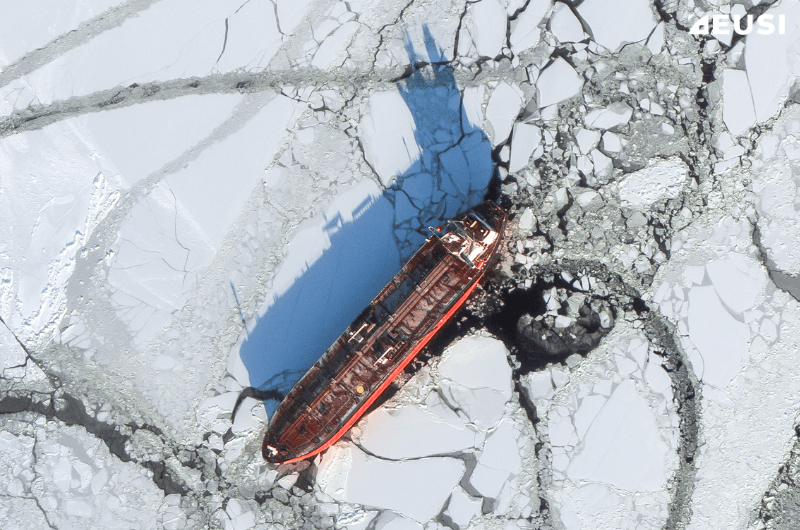
It’s true that satellites have a lower resolution than many aircraft sensors – but you don’t need 10 cm to accurately identify vessels. The 30–50 cm resolution of EUSI-operated satellites allows users to detect ships, including non-AIS vessels, and analyse their deck features. You can see helidecks, containers, cranes or missile launchers, and thus clearly recognise bulk carriers, oil tankers, icebreakers, military vessels, and other ship classes. All of that in large strips of homogeneous data, even over sensitive or remote territories.

Very high resolution satellite image of a ship in ice

Satellite imagery © 2026 Vantor Provided by European Space Imaging 

Monitor vessel behaviour over time

Satellite imagery is easily scalable – you can collect the same area repeatedly to assess vessel behaviour over time.

  • Monitor strategic coastal areas, ports, and remote installations.
  • Conduct seasonal change analysis, revealing emerging patterns of activity or escalation.
  • Verify the presence of escort vessels and the distance between escorted ships.
  • Monitor activity during AIS blackouts.

Regular data collection will not only improve your operational awareness in the High North, but also provide you with an objective, persistent record of activity that can be used as evidence in legal, diplomatic, or strategic matters.

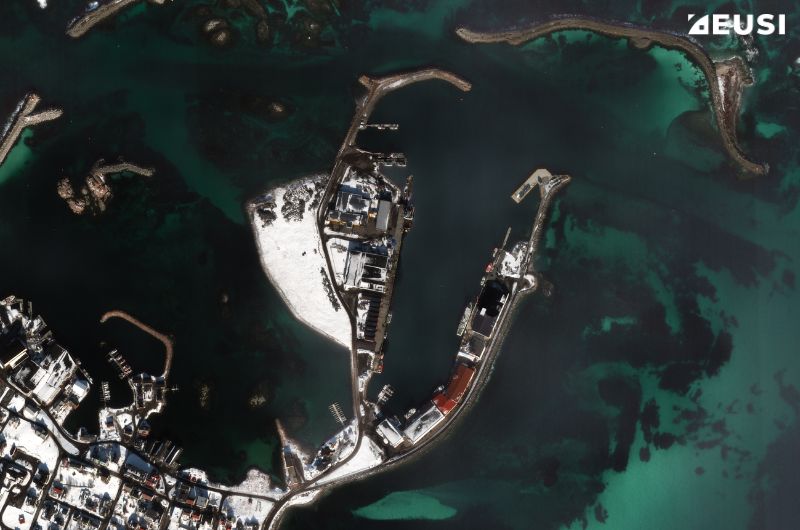
Very high resolution satellite image of a port, cargo ships are being loaded

Andenes Marina in Northern Norway. Satellite imagery © 2026 Vantor Provided by European Space Imaging

Near-real time insights

In February 2026, the Northern Fleet conducted an artillery shooting exercise only three to four nautical miles from Norwegian territorial waters5. In September 2025, Russia trained coastal attack scenario 30 km from border with Norway6. And just a month earlier, a nuclear powered battle cruiser departed from a shipyard in northern Russia, planning to sail to the Barents Sea for sea trials.7 It’s critical that we monitor activity like this in Near-Real time.

EUSI operates Vantor satellites from the German Aerospace Center near Munich, Germany. Depending on their exact location, optical orders can be delivered as fast as 15 minutes after collection – this is possible on a contractual basis, even for several orders in parallel. SAR imagery from Umbra is delivered within a few hours after collection.

Satellite imagery © 2026 Vantor Provided by European Space Imaging

SAR helps when the Arctic is under cloud cover

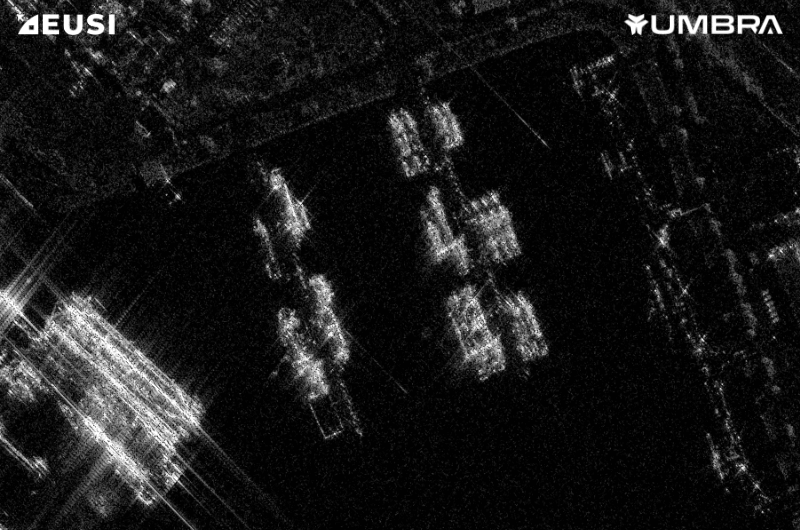
Unlike optical sensors, such as Vantor WorldView-3 or WorldView Legion, Synthetic Aperture Radar (SAR) uses electromagnetic waves and therefore doesn’t need clear skies or daylightEUSI’s partner Umbra offers SAR imagery at 25 cm resolution, with the possibility to combine it with optical data collected by EUSI (see DoubleShot). 

25 cm SAR image from Umbra, available for European users through EUSI© 2026 Umbra Provided by European Space Imaging 

Task satellite collections in ATOM

ATOM is EUSI’s platform for direct satellite tasking and archive ordering – with customisable parameters, live feasibilities, and last-minute tasking options. It was built for complex organisational structures, enabling management of different users with different hierarchies and permissions. You can browse ATOM for archive satellite images here or contact us to request a demo. 

References

[1] Rantanen, M., Karpechko, A. Y., Lipponen, A., Nordling, K., Hyvärinen, O., Ruosteenoja, K., Vihma, T., & Laaksonen, A. (2022). The Arctic has warmed nearly four times faster than the globe since 1979Communications Earth & Environment, 3, Article 168. Available at: https://www.nature.com/articles/s43247-022-00498-3 

[2] Arctic Council. (2026). Arctic shipping update: 40% increase in ships in the Arctic. Available at: https://arctic-council.org/news/increase-in-arctic-shipping/ 

[3] Joint Research Centre. (2024). Copernicus polar roadmap: EU satellite observations help respond to emerging polar challenges. Available at: https://joint-research-centre.ec.europa.eu/jrc-news-and-updates/copernicus-polar-roadmap-eu-satellite-observations-help-respond-emerging-polar-challenges-2024-09-03_en 

[4] Todorov, A. (2023). Arctic Shipping: Trends, Challenges and Ways ForwardBelfer Center for Science and International Affairs, Harvard Kennedy School. Available at: https://www.belfercenter.org/publication/arctic-shipping-trends-challenges-and-ways-forward 

[5] Myslenkov, S., Koldunov, N. V., Sokolov, A. V., & others. (2020). Sea waves impact on turbulent heat fluxes in the Barents Sea according to numerical modeling (Preprint). Atmospheric Chemistry and Physics Discussions. Available at: https://acp.copernicus.org/preprints/acp-2020-1007/acp-2020-1007.pdf 

[6] Nilsen, T. (2026, February 17). Russia launches artillery shooting next to maritime border with Norway. The Barents Observer. Available at: https://www.thebarentsobserver.com/security/russia-launches-artillery-shooting-next-to-maritime-border-with-norway/445387  

[7] Nilsen, T. (2025, September 19). Russia trains coastal attack scenario 30 km from border with NorwayThe Barents Observer. Available at: https://www.thebarentsobserver.com/security/russia-trains-coastal-attack-scenario-30-km-from-border-with-norway/437119  

[8] Nilsen, T. (2025, August 19). Nuclear powered battle cruiser sails again for the first time since 1997The Barents Observer. Available at: https://www.thebarentsobserver.com/security/nuclear-powered-battle-cruiser-sails-again-for-the-first-time-since-1997/435204 

Related Stories

Very High Resolution satellite image of the landslide in Niscemi, Italy

VHR Satellite Images Show Damage After Niscemi Landslide 

In January 2026, Italy declared state of emergency after being hit by Cyclone Harry – a storm that brought 10-metre waves and torrential rains of over 300 mm in 48 hours. The most severely affected regions were Sicily, Calabria and Sardinia, with the damage in Sicily alone estimated to be more than 1.5 billion euros. EUSI collected Very High Resolution satellite imagery of the affected areas, including Niscemi – a Sicilian town hit by a massive landslide.

Read More »
Very high resolution satellite image showing military aircraft

The Potential of WorldView Legion for the Safety and Security in Europe

In the ever-evolving landscape of global security, satellite imagery has become an indispensable tool for governments, organisations, and businesses worldwide. Many of them are now learning about the new opportunities that the six recently launched Vantor WorldView Legion satellites bring: higher border security, improved maritime surveillance, faster reaction to developing events, and much more.

Read More »