Supporting European Land Management Policies via Copernicus VHR2021
Skye Boag, Marketing Manager
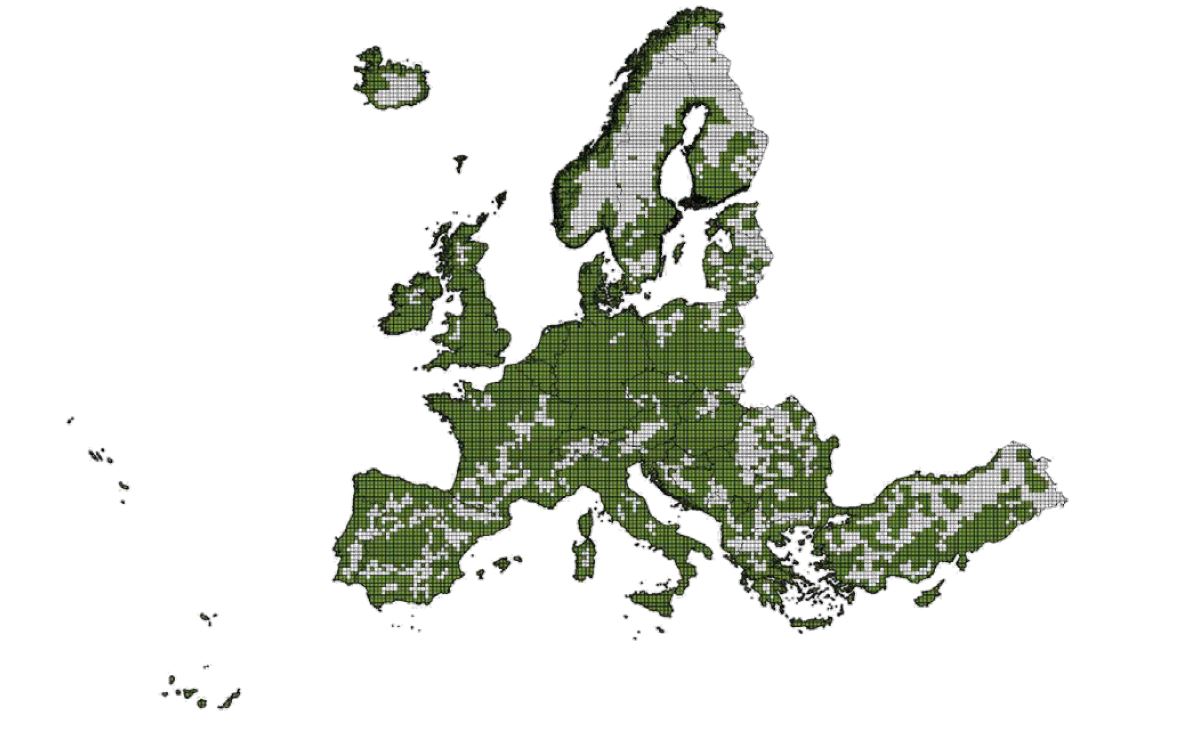
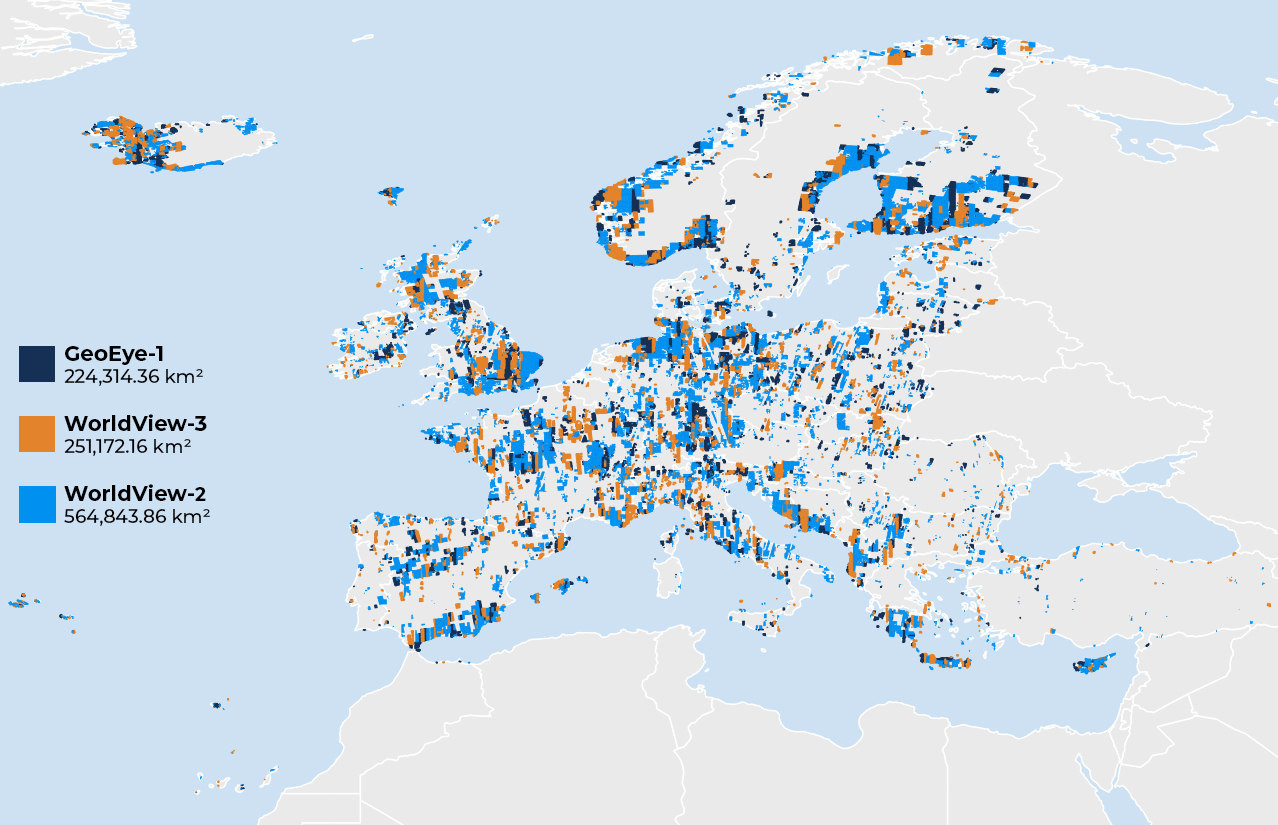
EUSI have delivered over one million sq km of cloud free satellite data to the Copernicus VHR2021 campaign in cooperation with Airbus and GAF AG. The VHR coverage provides a complete geospatial overview of Europe’s land and environment conditions every three years, arming European institutions and governments with data insights that bolster strategic environmental and land management policies. Collection began in May 2020 and was completed in September 2022, observing the demanding coverage requirements.
What is the Very High Resolution 2021 (VHR2021) Campaign?
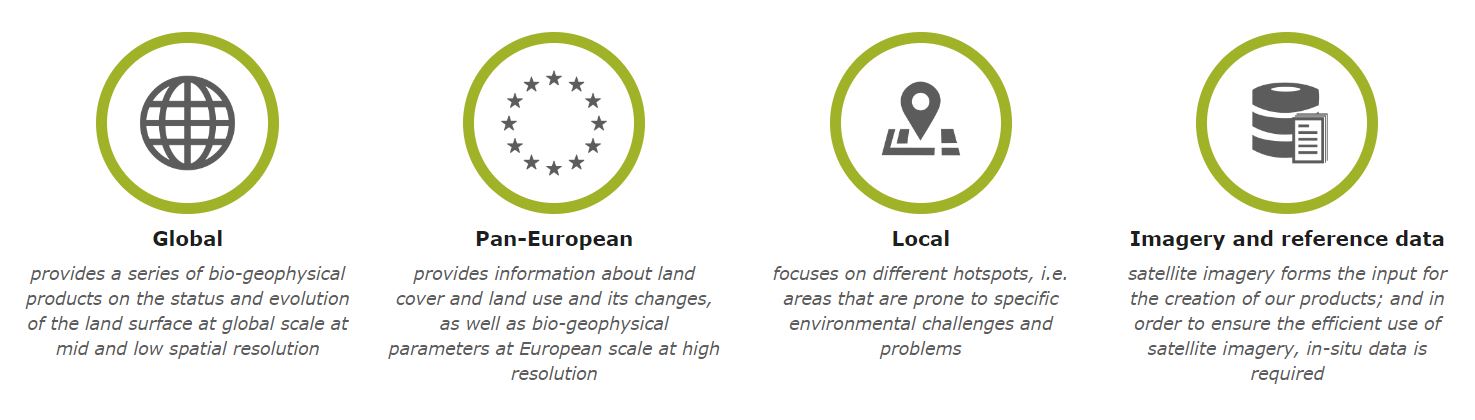
Copernicus is the European Union’s Earth observation programme managed by the European Space Agency (ESA). The objective of the VHR2021 coverage is to provide the Copernicus Service Providers and other users authorised by the European Commission with a complete coverage of the region EEA-39 countries with EO Very High Resolution optical data. The supply of data is then embedded in PRISM and operated through the systems in use for other Copernicus datasets. The VHR2021 dataset will be used primarily by the Copernicus Land Monitoring Service for its Pan-European and Local components which provides geographical information on land cover and related variables supporting applications in a variety of domains such as spatial planning, forest management, water management, agriculture and food security.
Figure: Overview of the main components of the Copernicus Land Service. Source: https://land.copernicus.eu/
Meeting Demanding Technical Requirements
The Copernicus Programme provides, on a sustainable basis, the use of multiple source data in a reliable and timely service to environment and security. Whilst some of this data comes directly from the Sentinels, other data at higher resolutions must be obtained from the Copernicus Contributing Missions (CCM’s). EUSI has been a long-standing provider to the CCM’s and was able to utilise this experience to meet the strict technical requirements of the VHR2021 coverage. The most demanding requirement of the project was the delivery of 100% cloud free, cloudshadow and haze-free coverage. Furthermore, there was a priority AOI requirement attached to 70% of the coverage collection that had to be delivered at 2 m spatial resolution. In addition, a minimum of 70% of the total coverage of the campaign, equating to approximately 4.2 million sq km of data, had to be acquired during the core year 2021. Lastly, the data acquired by the various satellites had to conform to the homogenous coverage requirements and minimise coverage fragmentation as much as possible.
Delivering the Data
A total of six million sq kilometres of multispectral data at resolutions 2 – 4 m was to be acquired for VHR2021. Several of the priority AOI’s are infamous for high cloud cover and required a flexible acquisition strategy that was managed by the Operations Team at EUSI meticulously. Real time weather assessments were taken into account, and tasking plans were adjusted up to 15 minutes before acquisition to maximise the collection efficiency of the Maxar WorldView constellation. Of the entire coverage, EUSI collected and delivered just over one million sq km of imagery with from WorldView-2, WorldView-3 and GeoEye-1 satellites; 96% of the data was delivered in 2021, while the remaining 4% was delivered in 2022, exceeding coverage requirements.
Related Stories

GEOSeries: Maintaining Temporal Control of Developing Situations With Rapid Satellite Tasking and Intraday Imaging
In the fast-moving operational environments of security monitoring and emergency response, the value of satellite data is defined by when it arrives, not just its resolution or accuracy. This webinar explores how Dynamic Tasking enables users to access actionable data fast and operate within mission decision windows.

VHR Satellite Images Show Damage After Niscemi Landslide
In January 2026, Italy declared state of emergency after being hit by Cyclone Harry – a storm that brought 10-metre waves and torrential rains of over 300 mm in 48 hours. The most severely affected regions were Sicily, Calabria and Sardinia, with the damage in Sicily alone estimated to be more than 1.5 billion euros. EUSI collected Very High Resolution satellite imagery of the affected areas, including Niscemi – a Sicilian town hit by a massive landslide.

The Potential of WorldView Legion for the Safety and Security in Europe
In the ever-evolving landscape of global security, satellite imagery has become an indispensable tool for governments, organisations, and businesses worldwide. Many of them are now learning about the new opportunities that the six recently launched Vantor WorldView Legion satellites bring: higher border security, improved maritime surveillance, faster reaction to developing events, and much more.

Beginner’s Guide to Satellite Imagery: 10 Terms You Need to Know
Satellite imagery is an amazing but highly technical field with terms that might be hard to understand, especially for somebody with expertise in a completely different area. That’s why we are explaining the basics of satellite imagery in this article. What’s geolocational accuracy? What is the ideal off nadir angle? How can you see through clouds? Let’s dive right in.