The Lifespan of Orbiting Satellites
- Skye Boag, Marketing Manager at European Space Imaging
European Space Imaging provides a brief overview of what happens to orbiting satellites when they are decommissioned and no longer usable.
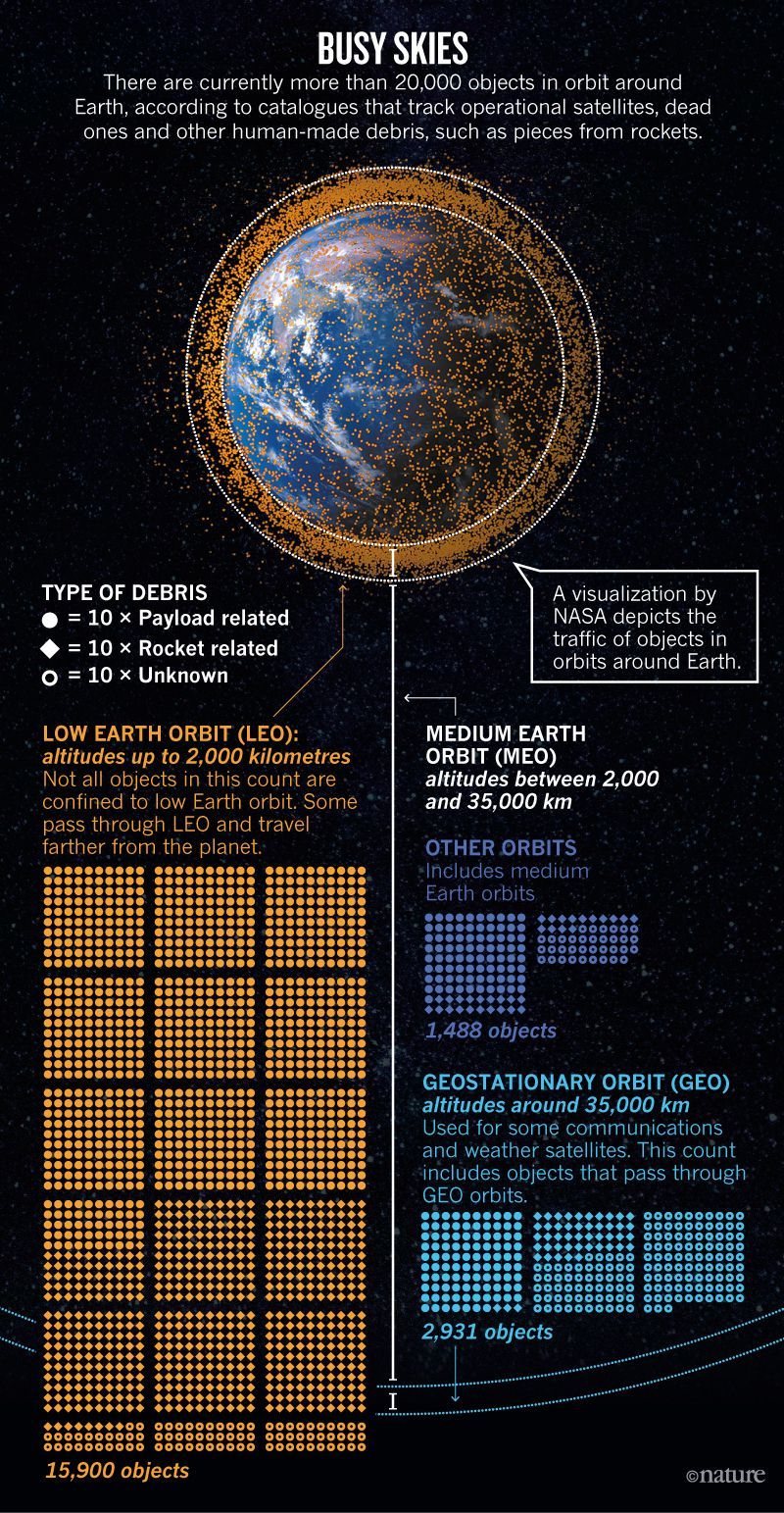
According to the Index of Objects Launched into Outer Space, maintained by the United Nations Office for Outer Space Affairs (UNOOSA) there were 4,987 satellites orbiting the planet at the start of the year, an increase of 2.68% compared to 2018. However of this number only 1,957 are currently active indicating that there is a lot of flying metal out there in space. In addition to all of these satellites, there are thousands of uncontrolled rocket bodies orbiting earth, along with more than 20,000 artificial objects floating around.
Whilst we understand the benefits of actively orbiting satellites, what about those that are no longer usable? Where do these satellites go when they die? These days there are two choices, depending on how high the satellite is. For smaller satellites closer to the Earth, engineers will use the last remaining fuel of the satellite to slow it down resulting in the satellite falling out of orbit and being burned up in the atmosphere. For larger satellites that orbit higher in space, the only option is to change the velocity of the object to send it further away. The reason for this is to more efficiently use the fuel of the satellite. It takes a tremendous amount of fuel to slow down the orbiting speed of a satellite so that it falls back into the atmosphere. For satellites orbiting high in space, it uses less fuel to blast the object further into space and therefore us a more effective means of disposal.
Spacecraft “cemeteries”
Disposing of smaller satellites in low earth orbit (LEO) is relatively simple. The heat from the friction of the air burns up the satellite as it falls closer towards Earth essentially incinerating the object into thin air. However, the process is not so simple for larger satellites in low orbit. It is impossible for these objects to completely disperse which imposes the risk of the satellite reaching the Earth’s surface potentially causing harm to the surrounding population. To avoid this, the satellites are brought down near the point of oceanic inaccessibility in the Pacific Ocean known as Point Nemo. This watery graveyard is literally the farthest place one can find from any human civilisation and is thought to house 250 – 300 spacecrafts.
Graveyard orbits
For larger satellites in geostationary orbit (GEO), it is far more effective to blast these objects far away into what is known as the “graveyard orbit” – more than 300 kilometres above the operational geostationary orbit. This imposes no threat to human population however it does contribute to “space junk”. Getting old spacecraft out of orbit is key to preventing the formation of space junk, and many space agencies and corporations now build spacecraft with systems to de-orbit them (and land them in the spacecraft cemetery).
Space clean up
Looking to the future, no nation yet has a concrete plan for clearing space junk. The Swiss Space Centre is currently developing a “janitorial satellite” called CleanSpace One to test technologies to engage, capture and deorbit end of life satellites and space junk. While a British satellite developed by the University of Surrey, RemoveDEBRIS, has successfully launched into space with the aim to test differing methods of removing space junk from orbit. The satellite has had success capturing space debris using a harpoon to spear objects and a deployable net to capture the debris. Furthermore, scientists are also tacking the problem of space junk by trying to understand where all the debris is to a high degree of precision. This field is called space-traffic management because of its similarities to managing traffic on the roads or in the air.
Source: ESA Annual Space Environment Report
Related Stories

GEOSeries: Maintaining Temporal Control of Developing Situations With Rapid Satellite Tasking and Intraday Imaging
In the fast-moving operational environments of security monitoring and emergency response, the value of satellite data is defined by when it arrives, not just its resolution or accuracy. This webinar explores how Dynamic Tasking enables users to access actionable data fast and operate within mission decision windows.
VHR Satellite Images Show Damage After Niscemi Landslide
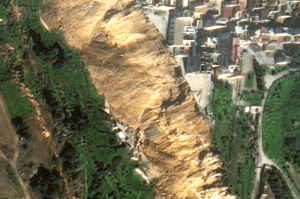
In January 2026, Italy declared state of emergency after being hit by Cyclone Harry – a storm that brought 10-metre waves and torrential rains of over 300 mm in 48 hours. The most severely affected regions were Sicily, Calabria and Sardinia, with the damage in Sicily alone estimated to be more than 1.5 billion euros. EUSI collected Very High Resolution satellite imagery of the affected areas, including Niscemi – a Sicilian town hit by a massive landslide.
The Potential of WorldView Legion for the Safety and Security in Europe
In the ever-evolving landscape of global security, satellite imagery has become an indispensable tool for governments, organisations, and businesses worldwide. Many of them are now learning about the new opportunities that the six recently launched Vantor WorldView Legion satellites bring: higher border security, improved maritime surveillance, faster reaction to developing events, and much more.

Beginner’s Guide to Satellite Imagery: 10 Terms You Need to Know
Satellite imagery is an amazing but highly technical field with terms that might be hard to understand, especially for somebody with expertise in a completely different area. That’s why we are explaining the basics of satellite imagery in this article. What’s geolocational accuracy? What is the ideal off nadir angle? How can you see through clouds? Let’s dive right in.