

IKONOS Decommissioned
- European Space Imaging
IKONOS outlived many of its younger siblings but today it is time to say goodbye.
After 15-plus years of successful service, DigitalGlobe made the decision to end the IKONOS mission. IKONOS was the world’s first sub-meter commercial earth imaging satellite, kick-starting what would become a multi-billion dollar industry for high resolution satellite imagery and geospatial products and services.
Built and launched by Lockheed Martin, IKONOS exceeded its initial life expectancy by nearly three times, collecting 599,754 images that contributed 408 million sq. km.—more than 8 times the surface of the globe—to the DigitalGlobe ImageLibrary. IKONOS archive imagery, dating back to 1999, provides the longest historical record of high resolution commercial satellite imagery and has greatly contributed to the understanding of our changing planet.
We remember IKONOS through some of its best shots… images that helped us change our view of the world.
Impact: What customers can expect
Over the next few weeks and months we will retire IKONOS related systems, including the IKONOS production system and GeoFUSE. The IKONOS production system is scheduled to be retired on March 31st 2015. This change will temporarily suspend access to IKONOS archive imagery products while we migrate the IKONOS archive to new production and delivery platforms.
We expect to inform our customers before Q3 2015 how IKONOS archive imagery can be ordered from this new platform. Until then, the IKONOS imagery archive will be unavailable for search, production or delivery. European Space Imaging thanks all our customers that used IKONOS imagery over the course of the mission and recognizes that this also helped launch our multi-billion dollar industry.
Upshot: Submit IKONOS archive imagery orders before March 31 or after migration
IKONOS new collection operations have already ended, and after March 31 the IKONOS imagery archive will be unavailable until the systems have been migrated. Any customer anticipating a need for any IKONOS imagery in the short term must submit an order prior to March 31 or wait until the migration is complete to order or receive IKONOS imagery. While the IKONOS archive migration is underway, our archive from all other sensors (QuickBird, WorldView-1, GeoEye-1, WorldView-2, and WorldView-3) will be available to meet customers’ imagery needs.
For further inquiries please contact your sales manager or customer support.
Related Stories

GEOSeries: Turning Satellite Data into Actionable Intelligence for Critical Energy Infrastructure
See how satellite imagery can make critical infrastructure monitoring more frequent, targeted and efficient. Monitoring hundreds or thousands of kilometres of pipelines, power lines and other critical infrastructure traditionally requires extensive field inspections, vehicle patrols or aerial surveys. Satellite-based monitoring offers a different approach: regularly analysing large networks, identifying potential risks and directing teams to the locations that require attention.
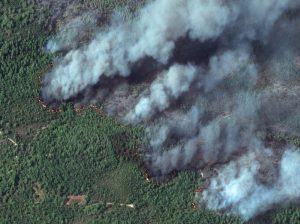
Gallery: Wildfires Across Europe in August 2026
The first week of August brought heatwaves, droughts, and wildfires. Here are satellite images showing the destruction.
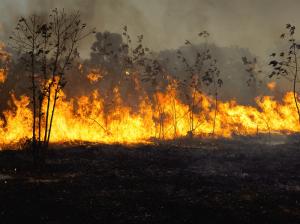
VHR Satellite Images for Wildfire Monitoring
High temperatures are breaking records, vegetation is drying up, and catastrophic wildfires are raging across Europe. Emergency responders are already turning to satellite imagery for fire monitoring and damage analysis – but few know its full potential. Near Real-Time (NRT) capabilities deliver critical images just 15 minutes after collection. Intraday imaging captures a fire as it develops throughout the day. And 8-band multispectral imagery lets responders see through haze, light fog, and other atmospheric conditions – including wildfire smoke itself.

Earth Observation Turns Ecological Targets into Measurable Outcomes: How Satellite Imagery Supports Compliance with Europe’s Nature Restoration Regulation
The EU’s Nature Restoration Regulation (NRR) entered into force in 2024 and set legally binding targets to restore degraded ecosystems across Europe. With National Restoration Plans due in September 2026, Member States face an urgent question: how do you map, plan and monitor restoration across millions of hectares in a consistent, verifiable way? Earth Observation (EO) – and Very High Resolution (VHR) multispectral satellite imagery in particular – is increasingly the answer.