Major Oil Spill in the Mediterranean
- European Space Imaging
French and Italian maritime authorities have commenced cleaning a major spill that has spread 20 kilometers in the Mediterranean Sea after two cargo ships collided north of the island of Corsica on Monday 8 October 2018.
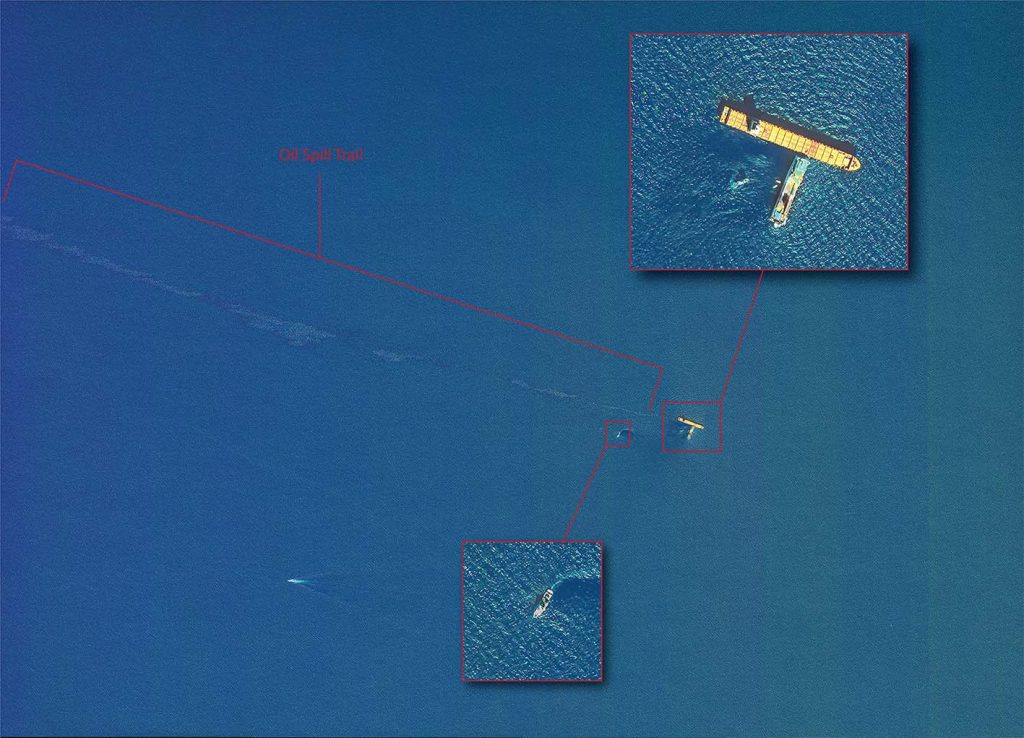
European Space Imaging captured a series of satellite images of the site on Tuesday 9 October at 50 cm resolution with WorldView-2.
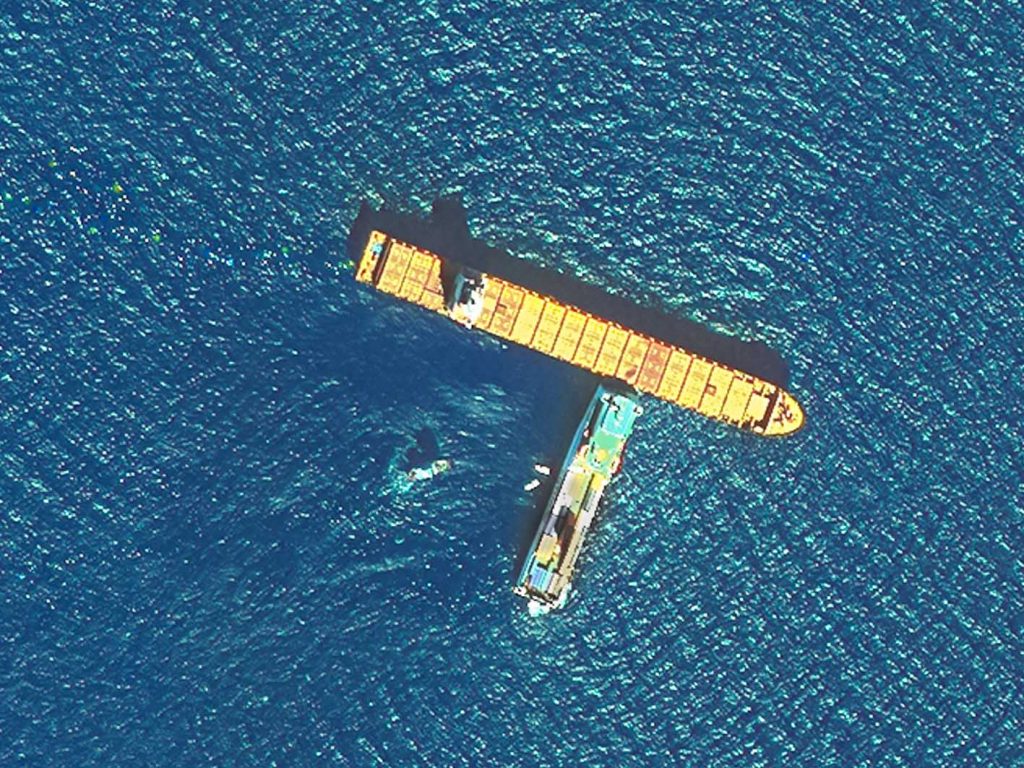
The vessels involved in the accident are the Ro-Ro Ulysse, owned and operated by the Tunisian shipping company Cotunav, which ran into the boxship CSL Virginia, owned by Cyprus Sea Lines while it was anchored about 30 km off the northern tip of the island causing upwards of 600 tonnes of fuel to be leaked.
Whilst no one was injured during the collision, the extent of the damage is considerable. Although it is still too early to determine exactly what happened, satellite imagery analysed from before and after the incident can provide key insights to assist the investigation process.
“Satellite Imagery is useful for first responders of any crisis to assess the scope of damage and get another view of the scene. It can also help to monitor and detect any changes that may be critical to minimising or even eliminating further catastrophe” said Adrian Zevenbergen, Managing Director of European Space Imaging. “The benefit of satellite imagery is that the different spectral bands can be used to classify unidentified materials making it an invaluable source of information for maritime disaster management.”
In an effort to contain the disaster, tugboats have been dispatched from three Italian ports and the French navy has also provided a vessel specialised in containing and cleaning up spills with oil spill experts dragging a floating barrier to contain the oil followed by the use of a skimmer to suck up the fuel.
“Satellite remote sensing plays a very strategic role in maritime surveillance and supports the entire response process, from providing initial detection and assessment for situational awareness to directing clean-up efforts” said Dr. Melanie Rankl. “Very high resolution satellite imagery is an additional asset to that of traditionally used radar-based oil spill detection technology. Its ability to provide a detailed overview of the area plays a complimentary role in conducting on-going assessments and monitoring the extent of damage.”
Satellite image at 50 cm resolution showing the collided ships and subsequent oil trail off the coast of Corsica, Italy. The high quality of the data makes it possible to zoom in on the image and thereby identify the extent of the damage and surrounding clean up efforts. ? 09/10/2018 by WorldView-2 © European Space Imaging
Related Stories

GEOSeries: Maintaining Temporal Control of Developing Situations With Rapid Satellite Tasking and Intraday Imaging
In the fast-moving operational environments of security monitoring and emergency response, the value of satellite data is defined by when it arrives, not just its resolution or accuracy. This webinar explores how Dynamic Tasking enables users to access actionable data fast and operate within mission decision windows.

VHR Satellite Images Show Damage After Niscemi Landslide
In January 2026, Italy declared state of emergency after being hit by Cyclone Harry – a storm that brought 10-metre waves and torrential rains of over 300 mm in 48 hours. The most severely affected regions were Sicily, Calabria and Sardinia, with the damage in Sicily alone estimated to be more than 1.5 billion euros. EUSI collected Very High Resolution satellite imagery of the affected areas, including Niscemi – a Sicilian town hit by a massive landslide.

The Potential of WorldView Legion for the Safety and Security in Europe
In the ever-evolving landscape of global security, satellite imagery has become an indispensable tool for governments, organisations, and businesses worldwide. Many of them are now learning about the new opportunities that the six recently launched Vantor WorldView Legion satellites bring: higher border security, improved maritime surveillance, faster reaction to developing events, and much more.

Beginner’s Guide to Satellite Imagery: 10 Terms You Need to Know
Satellite imagery is an amazing but highly technical field with terms that might be hard to understand, especially for somebody with expertise in a completely different area. That’s why we are explaining the basics of satellite imagery in this article. What’s geolocational accuracy? What is the ideal off nadir angle? How can you see through clouds? Let’s dive right in.