Habitat Preservation Using Satellite Imagery
- European Space Imaging
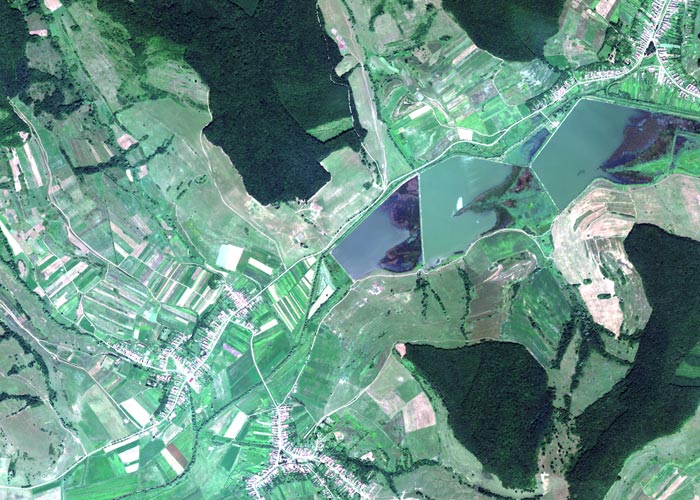
The Hartibaciu Tableland encompasses about 2,500 square kilometers in central Romania and is home to many rare species of birds, flora, and fauna. It is an area susceptible to flooding and landslides, is subject to development pressure, and is experiencing population growth. The World Wildlife Fund (WWF), in cooperation with the Danube Carpathian program and European Union, commissioned a geographic survey to create land management plan for the region.
Preserving the Habitat of Unique Species
Nearly 50 percent of Romania is covered by natural and semi-natural ecosystems. The country contains some of the largest undisturbed forest land in all of Europe and is home to about 400 unique species of mammals, birds, reptiles, and amphibians. At 2,500 square kilometers, the Hartibaciu region is an important site for habitat preservation. The World Wildlife Fund will use the data derived from this survey to create a land management plan to identify preservation strategies for the region moving forward over the next ten years.
Muncons SRL Tapped by WWF for Project
Muncons SRL has been a WorldView Global Alliance reseller for three years. Muncons serves dozens of customers in government, defense and intelligence, mining, natural resources, oil and gas, and humanitarian and conservation agencies. When the WWF was seeking a partner to complete a topographical survey of the Hartibaciu region, it chose Muncons for its deep experience in high-resolution imagery projects. The ultimate goal of the project is to create land management plans and develop territorial planning guidelines in the region by integrating the components of biodiversity, conservation in territorial development, and natural resource use.
Building a Framework for Land Management
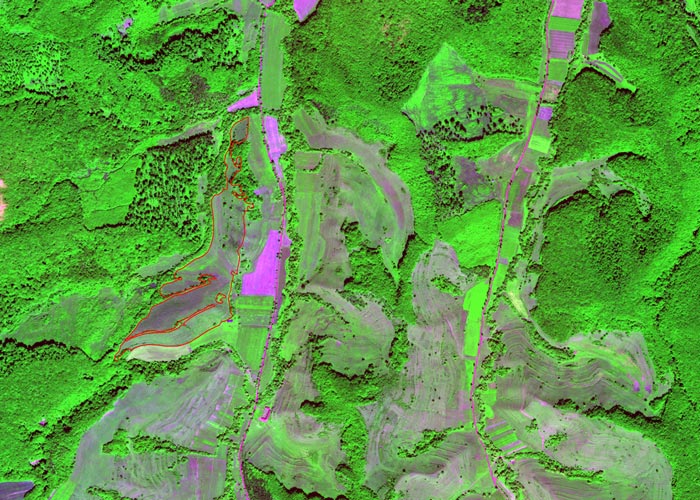
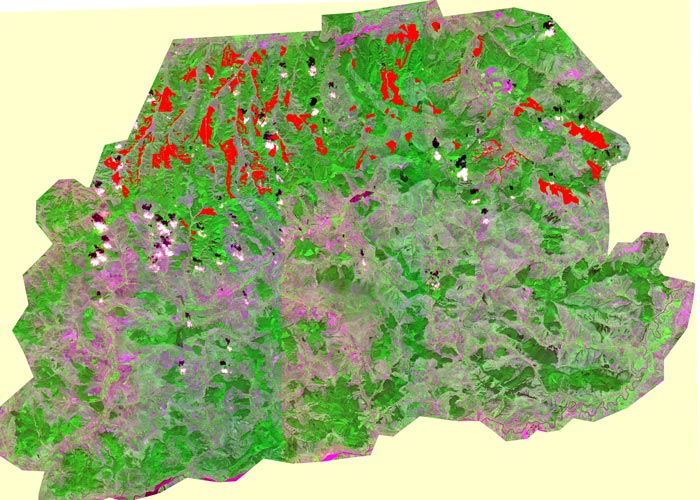
To build the necessary framework for proper management and preservation of the land, species, and habitats, Muncons deployed DigitalGlobe’s WorldView-2 8-band multispectral satellite. The resulting images were used for automatic and semi-automatic habitat classification, including land, water courses, infrastructure, and developed areas such as buildings, roads and industrial zones.
Muncons also created an integrated GIS solution to map species and habitats. The supplemental web portal included interactive maps of endangered species distribution, areas of vegetation, agriculture, preservation lands and environmental hazards.
“The goal was to create a comprehensive solution that the WWF, Nature 2000 and other stakeholders could use to create a far-reaching land management plan that could be used in many ways to promote conservation and preservation,” says Horia Munteanu, Director, Muncons SRL.
A Cost-Effective Solution
The use of WorldView-2’s high-resolution multispectral imagery and automatic image analysis resulted in rapid classification of habitats. The World Wildlife Fund was able to save a significant amount of money because fewer field specialists were required to complete the project.
"We provided authorities, investors and other stakeholders with a tool that allowed them to quickly, easily, and cost-effectively identify areas of endangered animal and vegetative species. We are clearly achieving the goals of increasing the involvement of a variety of stakeholders to create a land management plan to protect the environmental integrity of the region."
HORIA MUNTEANU, Director, Muncons SRL
Challenge
Create a solution to provide various stakeholders with the data and tools to create a comprehensive land management plan to protect the sensitive habitat of Romania’s Hartibaciu region.
Solution
Muncons SRL deployed WorldView-2 high-resolution satellite imagery with an integrated GIS solution and web portal to develop a land management plan used by a variety of takeholders.
Results
An accurate, cost-effective solution that has been used by the WWF and Natura 2000, the EU’s nature and biodiversity policy group to raise awareness of the environmental sensitivities of the region.
ABOUT MUNCONS SRL
Muncons SRL, a WorldView Global Alliance authorized reseller for the past three years, serves dozens of customers in government, defense and intelligence, mining, natural resources, oil and gas, and humanitarian and conservation agencies.
Related Stories

GEOSeries: Maintaining Temporal Control of Developing Situations With Rapid Satellite Tasking and Intraday Imaging
In the fast-moving operational environments of security monitoring and emergency response, the value of satellite data is defined by when it arrives, not just its resolution or accuracy. This webinar explores how Dynamic Tasking enables users to access actionable data fast and operate within mission decision windows.

VHR Satellite Images Show Damage After Niscemi Landslide
In January 2026, Italy declared state of emergency after being hit by Cyclone Harry – a storm that brought 10-metre waves and torrential rains of over 300 mm in 48 hours. The most severely affected regions were Sicily, Calabria and Sardinia, with the damage in Sicily alone estimated to be more than 1.5 billion euros. EUSI collected Very High Resolution satellite imagery of the affected areas, including Niscemi – a Sicilian town hit by a massive landslide.

The Potential of WorldView Legion for the Safety and Security in Europe
In the ever-evolving landscape of global security, satellite imagery has become an indispensable tool for governments, organisations, and businesses worldwide. Many of them are now learning about the new opportunities that the six recently launched Vantor WorldView Legion satellites bring: higher border security, improved maritime surveillance, faster reaction to developing events, and much more.

Beginner’s Guide to Satellite Imagery: 10 Terms You Need to Know
Satellite imagery is an amazing but highly technical field with terms that might be hard to understand, especially for somebody with expertise in a completely different area. That’s why we are explaining the basics of satellite imagery in this article. What’s geolocational accuracy? What is the ideal off nadir angle? How can you see through clouds? Let’s dive right in.