Sun Glint Can Ruin Satellite Imagery. How Do We Avoid It?
- Zuzana Hajkova, Content Marketing Coordinator, EUSI
Sun glint occurs when sunlight reflects off water or another reflective surface at the satellite sensor, creating a bright glare in the image. That can make it impossible to extract useful information from satellite imagery. What do we do to minimise its impact?
What is sun glint?
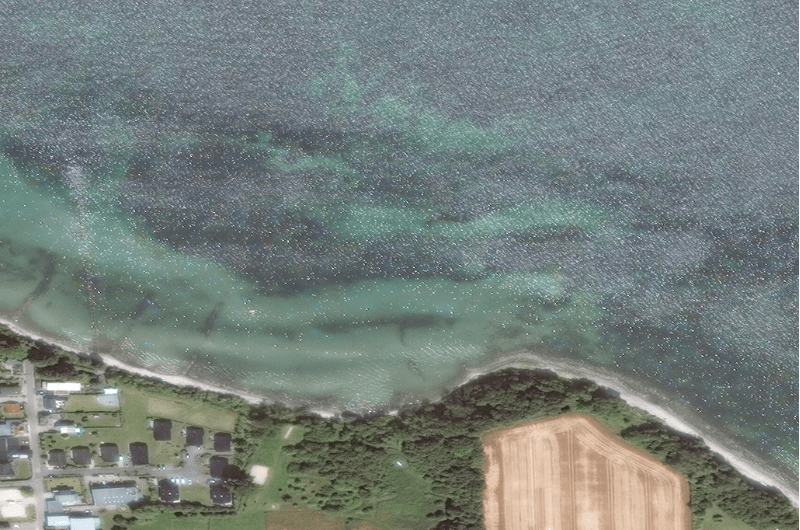
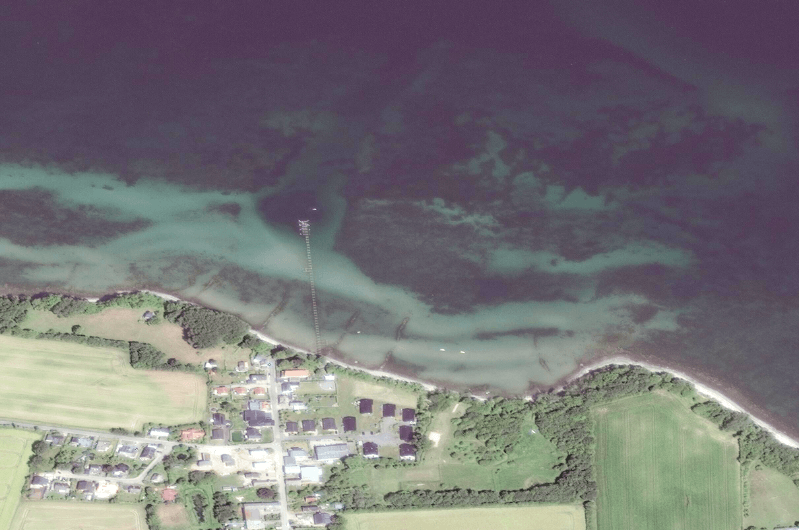
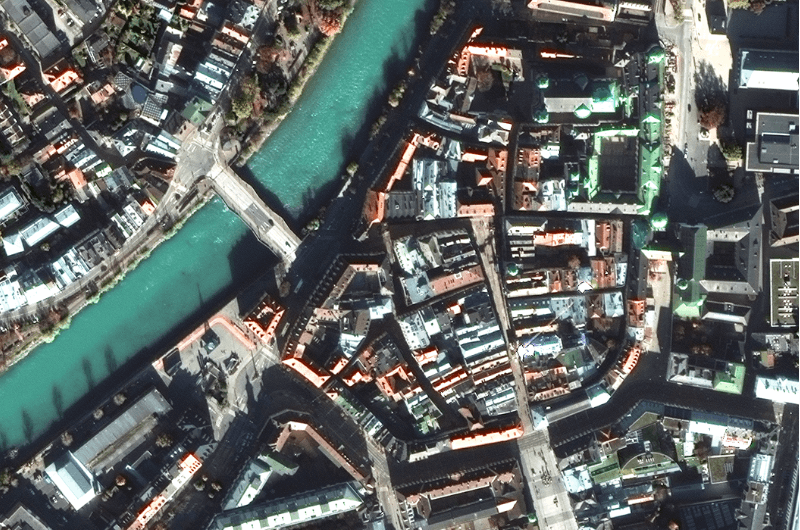
Sun glint is the reflection of light in satellite or aerial imagery. It can look like a bright glare or blurry streaks of light, often obscuring the underlying features and making it challenging, if not impossible, to extract useful information from the data. Therefore, sun glint in satellite images is a major problem for most remote sensing projects.
This optical phenomenon occurs when a satellite collects an image over a reflective surface, such as:
- body of water (ocean, lake, or even a small pond)
- solar panel
- metal roof
- greenhouse
The reflection can vary in intensity, depending on the angle of the sun, the viewing angle of the satellite, or the roughness of the water’s surface. The calmer the water, the sunnier the day, and the lower the sun elevation, the higher the risk of sun glint occurring.
The science of water reflection
If a body of water was perfectly smooth and calm, it would act like a mirror, and sun glint would look like a series of glares along the satellite’s orbit. But that is usually not the case, as water is influenced by gusts of wind and currents, forming waves or underwater movements. This results in sun glint appearing as a vast area of blurry, glimmering streaks of light, changing the colour and texture of the water in the image.


THE ROLE OF SUN ELEVATION
Sun glint is most pronounced when the sun is low on the horizon, either in the morning or evening. Latitude can also play a role, as the farther in the north and the south you go, the lower the sun is in winter. This angle of illumination increases the likelihood of sunlight reflecting off the surface directly into the satellite sensor.
REGIONAL DEPENDENCE
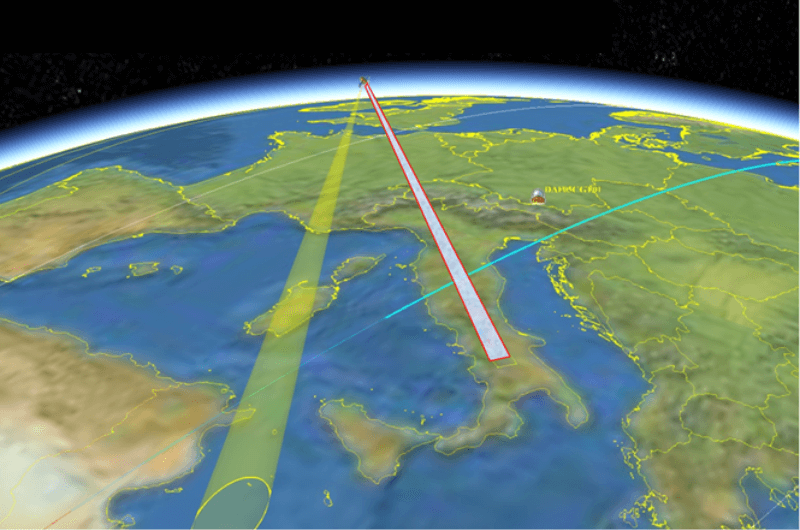
Between the latitudes of 30 °N and 30 °S, sun glint can be seen throughout the whole year. However, the phenomenon is not rare at higher latitudes either. Usually from March to September, sun glint occurs much farther north – in Italy, Germany, Norway, or even above the Arctic Circle – and much farther south.

The angle of the satellite sensor plays a crucial role
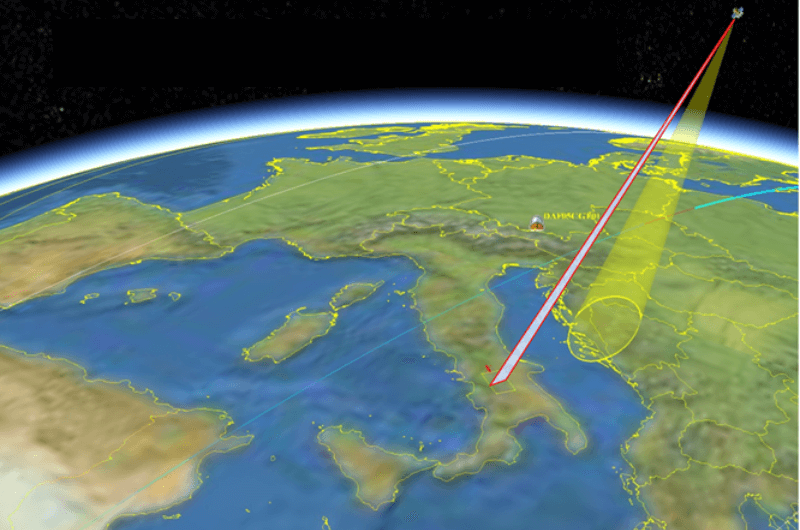
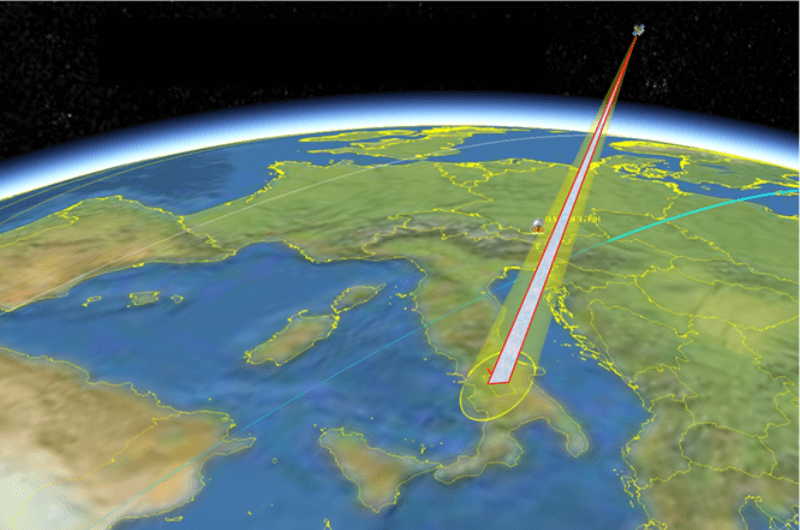
Sun glint occurs when sunlight reflects off the surface at the same angle that the satellite sensor observes it. By adjusting the angle at which the satellite and its sensor image a target, it is possible to reduce or even completely avoid sun glint in satellite images.
EUSI follows a specific procedure to minimise the impact of sun glint on image quality
We use Intelligent Collection Planning (ICP), a process that combines automated imagery collection planning with manual adjustments by experts for further quality and efficiency. If a collection is scheduled over a sun glint region, our newest collection planning system automatically adjusts the collection plan to ensure the satellite’s looking direction to the area of interest doesn’t point to a region prone to sun glint.
Additionally, we manually refine the timing and angle of the imaging. It is not possible to completely eliminate 100% of all sun reflection in the images, however, our approach allows us to provide high-quality data with a minimum impact of sun glint, meeting even the most stringent technical requirements.


Related Stories

Beginner’s Guide to Satellite Imagery: 10 Terms You Need to Know
Satellite imagery is an amazing but highly technical field with terms that might be hard to understand, especially for somebody with expertise in a completely different area. That’s why we are explaining the basics of satellite imagery in this article. What’s geolocational accuracy? What is the ideal off nadir angle? How can you see through clouds? Let’s dive right in.

Europe’s Green and Digital Transformations with 25 Years of VHR Satellite Archive Data
Planning Europe’s future without knowing its past is impossible. The European Green Deal, Horizon Europe, the EU Biodiversity Strategy for 2030 and other policies all demand one thing: evidence. Not just today’s data, but years of history that show how our cities, forests, and coastlines have changed.

AI Uses 15 cm Satellite Images to Cut Costs and Increase Scalability in Forest Management and Urban Forestry
Forest managers across Europe face an impossible task: monitor millions of hectares with shrinking budgets while meeting increasingly strict EU environmental targets. But with the rise of AI and satellite technology, they now have new solutions at their disposal – smarter, cheaper, and more scalable – to monitor forest health, automate tree inventories, and plan sustainable logging. In this article, we introduce one of these solutions: an AI forestry algorithm developed by Arboair using 15 cm satellite data from EUSI.

GEOSeries: Extracting Insights From High Resolution SAR Imagery for Time-Sensitive Analysis
In this webinar, industry experts and advanced users of Umbra SAR data showcase how they transform SAR imagery into actionable insights in real-world mapping, monitoring and intelligence applications. See how NV5 and Umbra leverage ENVI SAR Essentials for advanced processing with time-efficient results, converting analytics into valuable intelligence.