To See the Sea – Achieving Total Maritime Awareness With VHR Satellite Imagery
- Skye Boag, Marketing Manager at European Space Imaging
The ocean is a precious resource that all Europeans make use of in one way or another. Over 200 million of us live near the sea, and even people who dwell inland benefit from using it for transport, food or leisure. The following article gives an overview of maritime projects that have benefited from the use of very high resolution (VHR) satellite imagery.
Protecting this natural resource is complex and multi-faceted; it must be kept healthy while sustainably supporting the different businesses and individuals who rely on it, and who often have conflicting needs. Additionally, it is under threat from pollution, climate change, flooding, erosion, sea-level rise, extreme weather events, and overfishing.
There is a growing need for coverage and detection of large maritime areas, mainly in the exclusive economic zone (EEZ). Since physically accessing such a large area is practically impossible, satellite-based sensors offer an efficient and cost-effective solution.
By combining these data sources with artificial intelligence and machine learning, further insights can be gained autonomously and in a timelier manner.
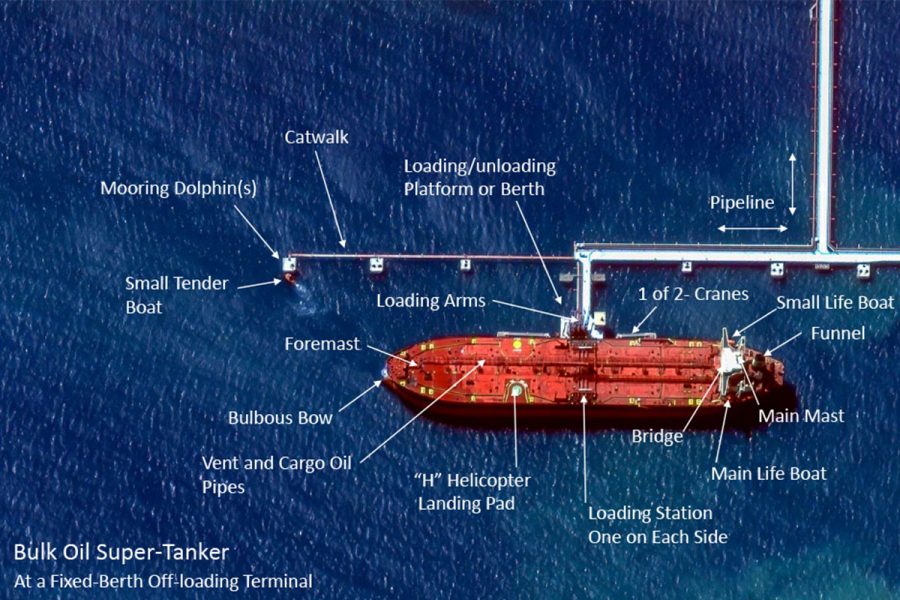
For example, radar data of a large ocean area can be obtained from a satellite and run through an AI program to automatically identify potential vessels. This results in the identification of a specific geolocation of the vessel so that a Very High Resolution (VHR) optical satellite image can be obtained. The VHR image then provides the level of detail needed to identify the object in the water. This process is known as tipping and cueing.
Download the Latest Edition of INCITE
To See the See: Achieving Total Maritime Awareness Using Satellite Imagery
The definitive guide to acquiring and using satellite imagery in the maritime industry.
Anti-drug Trafficking Operations in the Mediterranean
In May 2017, The Maritime Analysis and Operations Centre – Narcotics (MAOC(N)) believed that a known vessel had been involved in a transshipment of heroin. The location of the transshipment was not known, but although the vessel was not reporting its position, it was believed that it was somewhere in the Suez Bay.
In support of live operational activity, a request for optical satellite imagery was directed to Copernicus Maritime Surveillance and the order was fulfilled by European Space Imagery. The delivered products allowed operators to confirm that the vessel was no longer in the Suez bay and it was heading north. This information was shared immediately with the Turkish authorities, who intercepted the vessel, arrested nine crew members and seized more than 1 ton of heroin.
Whales Held in Captivity in Russia
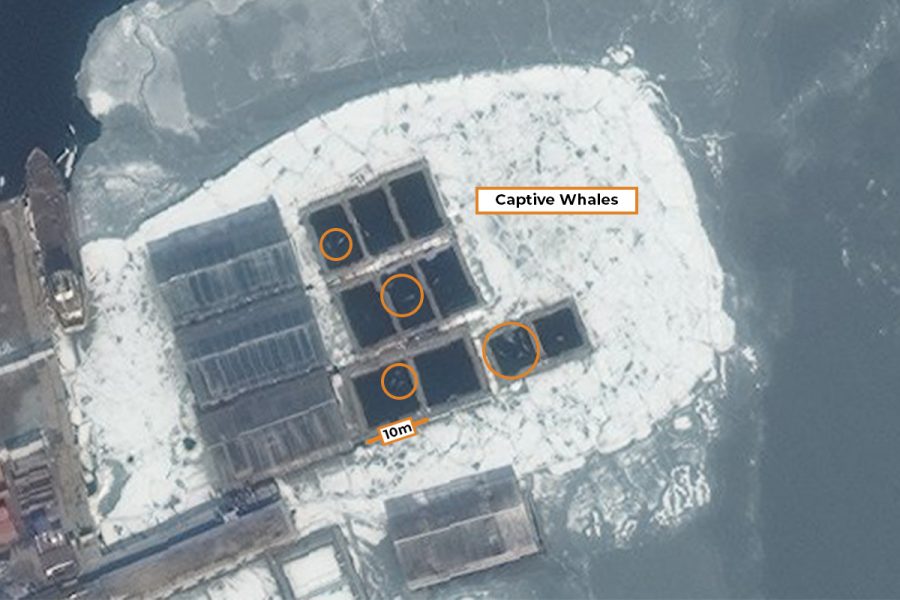
In February 2019 it was alleged that Russia had illegally captured eleven killer whales and were holding them in Srednyara Bay along with 87 belugas. Four Russian companies that supply marine animals to aquariums had caught the whales during Summer 2018. To verify the existence of the “whale jail” a series of satellite images at 30 cm were captured.
50 cm Resolution WorldView-2 image of whales held in captivity in Russia
Very High Resolution imagery is being utilized internationally by both maritime surveillance agencies and animal rights groups to shed light on illicit fishing operations and aid in legal proceedings,” said European Space Imaging Managing Director, Adrian Zevenbergen. “In these images captured by WorldView-3 in late February, a number of whales can be seen inside the pins, which may provide crucial evidence as international criminal investigations move forward.”
In addition to receiving extensive media coverage, a criminal investigation was launched. In April 2019 the Russian Government in partnership with two American NGO’s announced that all 97 whales would be released back into the wild. This was completed in November 2019.
Major Oil Spill in the Mediterranean
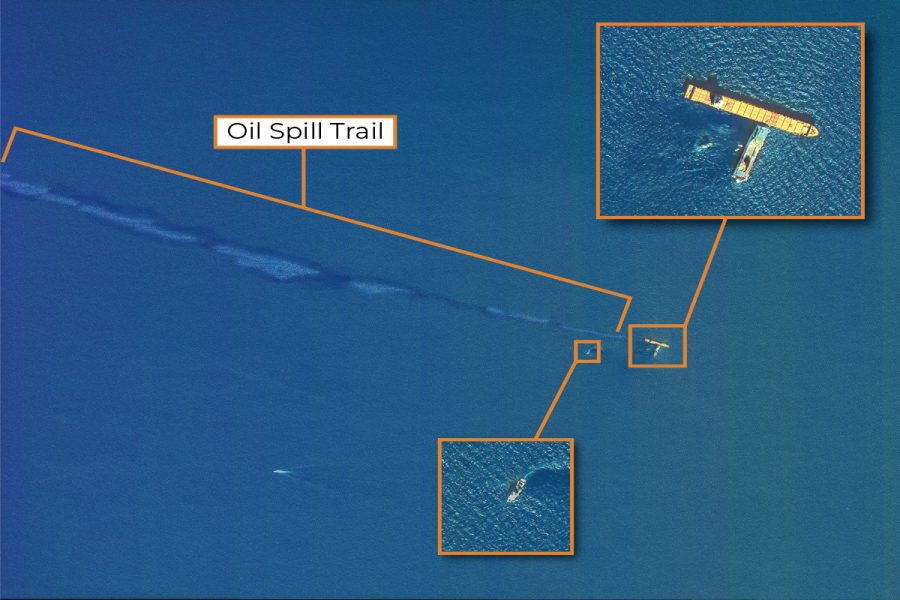
In October 2018 two cargo ships collided north of the island of Corsica causing upwards of 600 tons of fuel to be leaked into the Sea causing an oil slick 50 m long. In accordance with emergency management, maritime regulation and environmental protection efforts, detailed maps and models were required immediately to begin the processes of cleaning up the accident.
Emergency orders were placed with European Space Imaging who then scheduled the WorldView-2 satellite to capture images at 50 cm resolution over the site of the accident. These images were delivered to French and Italian maritime authorities within hours. From the data, oil drift and fate predictions were able to be simulated and it was determined that the coastlines of Italy, Monaco and France were at risk of oil pollution in the days after the incident. This allowed officials to preemptively respond in coastal areas and dispatch clean-up vessels ahead of the drifting oil. The oil was, therefore, able to be controlled and cleaned faster and more comprehensively.
VHR satellite image used for emergency cleanup up operations after naval accident and oil spill off the coast of Corsica in 2019.
“Satellite remote sensing plays a very strategic role in maritime surveillance and supports the entire response process, from providing initial detection and assessment for situational awareness to directing clean-up efforts” said Dr. Melanie Rankl. “Very High Resolution satellite imagery is an additional asset to that of traditionally used radar-based oil spill detection technology. Its ability to provide a detailed overview of the area plays a complimentary role in conducting on-going assessments and monitoring the extent of damage.”
Highly Automated Beach Litter Detection
Each year ocean trash kills over one million birds and 100,000 mammals and turtles. Satellite imagery is already an essential tool in locating objects and debris in large or remote areas however this study aimed to prove that Very High Resolution satellite imagery could be used in combination with artificial intelligence to streamline litter detection processes. Partnering with Tama Group, European Space Imaging was able to supply 30 cm Very High Resolution WorldView-3 imagery for a proof-of-concept study straight from its archive. A single pixel in a 30 cm satellite image will depict 30×30 cm of whatever was on the ground when the image was taken. This means a beach towel is big enough to be seen clearly by the naked eye, but a child’s bucket and spade on the sand is probably not – except perhaps in a slight change of the pixel’s color when compared to its neighbors. A change that is very difficult to interpret, and to spot.
“The trash we find on beaches is typically a diameter of 10cm and maybe a pixel size long,” Ralph said. “And so we had to take a statistical approach – if there are litter candidates in pixels of that size, at a certain amount of trash it starts looking like a signal. The first part of this exercise was figuring out if it is technically possible to detect this at all.”
Using eCognition, the satellite data was stacked with additional layers containing information gathered from experts on marine litter. Once the programming of the parameters was complete, the process was designed to be 100% automated. After the analysis of the first two WorldView-3 images the machine came up with 27 pixels marked as litter candidates, a result that is promising based on a visual inspection of the data. The future hope of this discovery is the integration of the technology into regular monitoring services for government of tourism organizations.
Example of vessel detection and identification.
Related Stories

VHR Satellite Images Show Damage After Niscemi Landslide
In January 2026, Italy declared state of emergency after being hit by Cyclone Harry – a storm that brought 10-metre waves and torrential rains of over 300 mm in 48 hours. The most severely affected regions were Sicily, Calabria and Sardinia, with the damage in Sicily alone estimated to be more than 1.5 billion euros. EUSI collected Very High Resolution satellite imagery of the affected areas, including Niscemi – a Sicilian town hit by a massive landslide.

The Potential of WorldView Legion for the Safety and Security in Europe
In the ever-evolving landscape of global security, satellite imagery has become an indispensable tool for governments, organisations, and businesses worldwide. Many of them are now learning about the new opportunities that the six recently launched Vantor WorldView Legion satellites bring: higher border security, improved maritime surveillance, faster reaction to developing events, and much more.

Beginner’s Guide to Satellite Imagery: 10 Terms You Need to Know
Satellite imagery is an amazing but highly technical field with terms that might be hard to understand, especially for somebody with expertise in a completely different area. That’s why we are explaining the basics of satellite imagery in this article. What’s geolocational accuracy? What is the ideal off nadir angle? How can you see through clouds? Let’s dive right in.

Europe’s Green and Digital Transformations with 25 Years of VHR Satellite Archive Data
Planning Europe’s future without knowing its past is impossible. The European Green Deal, Horizon Europe, the EU Biodiversity Strategy for 2030 and other policies all demand one thing: evidence. Not just today’s data, but years of history that show how our cities, forests, and coastlines have changed.