European Space Imaging, €20 Million Maritime Contract

European Space Imaging has been awarded its third major contract for the provision of very high resolution optical satellite data to the European Maritime Safety Agency (EMSA), ranking number one among a strong field of European competitors to provide all data sets and strengthening their position as Europe’s leading provider of very high resolution satellite optical imagery.

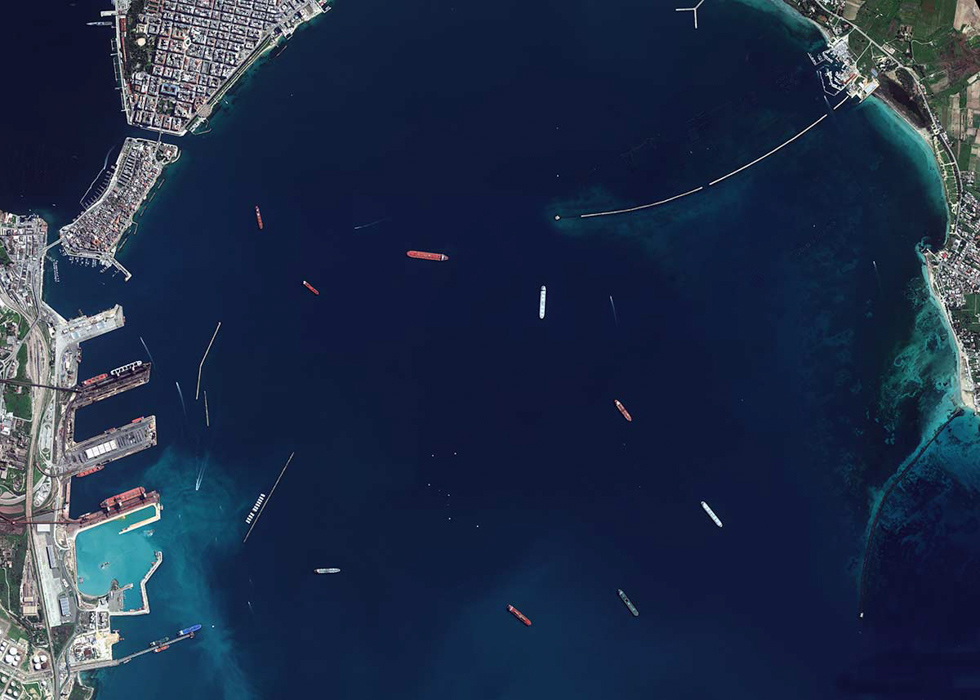
EMSA includes optical satellite images as part of its maritime surveillance services to the European Commission and Member States to support a number of functions in the maritime domain, such as safety, security, environmental monitoring, and law enforcement.

The €20 million, four year service level agreement, signed in September 2018, was won by European Space Imaging in cooperation with their partners the German Aerospace Centre (DLR), DigitalGlobe, a Maxar company, ImageSat International and Deimos Imaging.

The tender requirements were very stringent and demanded that suppliers have the capacity to deliver newly acquired images and subsequent value-added services such as vessel detection or oil spill notification in quasi- or near-real-time.

To fulfill EMSA’s imaging requirements, European Space Imaging’s offering draws upon a total of seven very high resolution satellites, including DigitalGlobe’s leading constellation of GeoEye-1, WorldView-1, WorldView-2, WorldView-3 and WorldView-4; Imagesat International’s EROS-B; and Deimos Imaging’s Deimos-2.

“Our efficient operations enable us to support European organisations providing ongoing imagery and services to member states,” said Adrian Zevenbergen, Managing Director of European Space Imaging. “I want to thank our team of professionals and our dedicated partners for their great achievement in offering the most competitive near-real-time image delivery services. We are continually expanding our capacities to ensure we offer the best quality and highest resolution satellite imagery commercially available.”

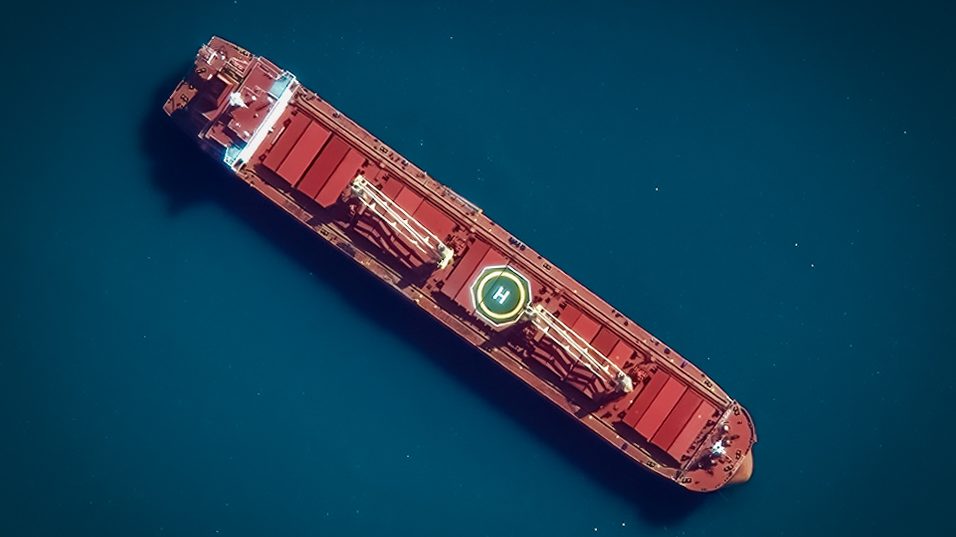
European Space Imaging is the only satellite imagery provider to offer true 30 cm resolution satellite data in Europe, and has a proven track record offering imagery and value-added services such as vessel and pollution detection to the maritime sector.

“The resolution and rapid revisit available from the latest very high resolution satellites mean that optical satellite imagery is a viable resource for the maritime sector, helping to enhance maritime domain awareness,” said Dr. Melanie Rankl, Maritime Account and Project Manager at European Space Imaging. “A combination of local satellite tasking and post processing carried out by the DLR allows us to provide a unique, near real-time service to EMSA and the European member states it serves.”

Related Stories

Very High Resolution satellite image of the landslide in Niscemi, Italy

VHR Satellite Images Show Damage After Niscemi Landslide 

In January 2026, Italy declared state of emergency after being hit by Cyclone Harry – a storm that brought 10-metre waves and torrential rains of over 300 mm in 48 hours. The most severely affected regions were Sicily, Calabria and Sardinia, with the damage in Sicily alone estimated to be more than 1.5 billion euros. EUSI collected Very High Resolution satellite imagery of the affected areas, including Niscemi – a Sicilian town hit by a massive landslide.

Read More »
Very high resolution satellite image showing military aircraft

The Potential of WorldView Legion for the Safety and Security in Europe

In the ever-evolving landscape of global security, satellite imagery has become an indispensable tool for governments, organisations, and businesses worldwide. Many of them are now learning about the new opportunities that the six recently launched Vantor WorldView Legion satellites bring: higher border security, improved maritime surveillance, faster reaction to developing events, and much more.

Read More »
Satellite image of a city at very high resolution

Beginner’s Guide to Satellite Imagery: 10 Terms You Need to Know

Satellite imagery is an amazing but highly technical field with terms that might be hard to understand, especially for somebody with expertise in a completely different area. That’s why we are explaining the basics of satellite imagery in this article. What’s geolocational accuracy? What is the ideal off nadir angle? How can you see through clouds? Let’s dive right in.

Read More »